

Seeing the Bigger Picture: Telepsychiatrist Dr. Robert Hudak’s In-Person Visit to a Rural Clinic
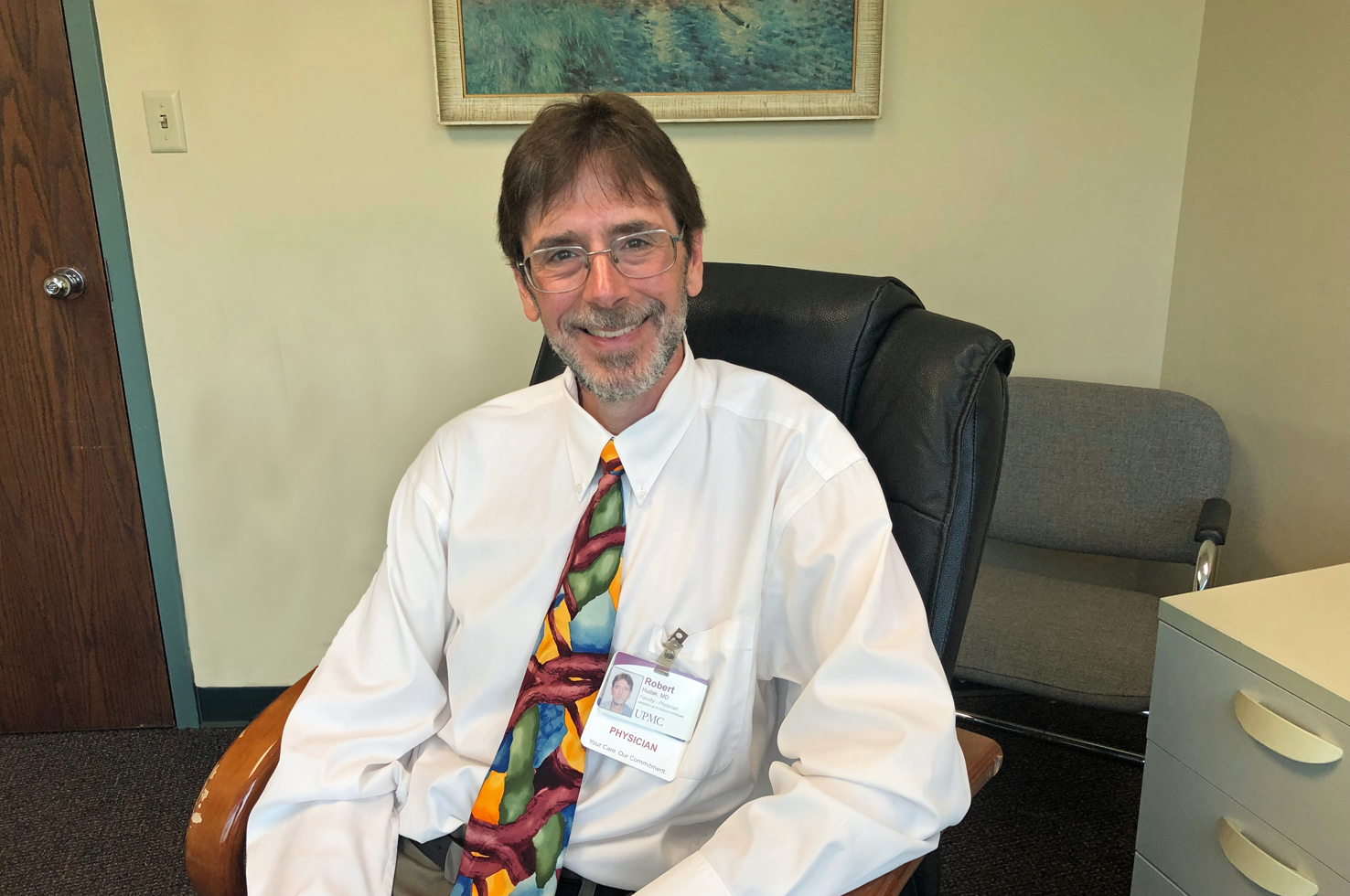
Robert Hudak, MD, primarily works with adults with obsessive compulsive disorder at UPMC Western Psychiatric Hospital (WPH), but during the last four years he has also treated patients through WPH’s telepsychiatry program, which averages 10,000 visits annually.
Recently, Dr. Hudak traveled to the rural outpatient clinic that serves the patients he treats via telepsychiatry. The trip provided Dr. Hudak with the opportunity for rewarding, in-person connection with patients, as well as some unexpected insights into their lives.
We spoke with Dr. Hudak about how the trip enhanced his telepsychiatry work.
Before your visit to the clinic, what had your experience with telepsychiatry been like?
Telepsychiatry involves meeting with patients over video. At first, I struggled with the technology aspect—it didn’t feel natural to me, but I became more comfortable over time. I also recognize the vital importance of access because my patients live in such a remote area. Without this service, they wouldn’t receive psychiatric treatment.
Telepsychiatry also provides some nice balance in my own life as a clinician, since I can see patients from home, which cuts down on commuting time.
What led you to visit the clinic?
I had been on vacation, driving through that part of the state, and realized I was close to the clinic. I wanted to visit because I thought it would help to see the space and to meet the staff and patients, but it was a weekend and they were not open. I mentioned this later to Gina Perez, MD, who oversees our telepsychiatry program. She suggested that I go visit.
What happened on the trip?
I met the staff and was able to see the physical space, which was more important than I anticipated. Since the camera only shows what’s directly in front of it during a patient visit, being able to see the larger room provided helpful context.
I can see up to 12 patients a day, and the clinic planned a full schedule of appointments for me. A few patients knew in advance that I would be there, but most of them didn’t. It was fascinating to see them light up when they saw me in person rather than on the screen. It’s hard to describe adequately how meaningful it was to see that over and over.
There was also one patient who was particularly challenging diagnostically, as well as from a management standpoint. Meeting her in person was enormously helpful, especially diagnostically.
How did learning about the surrounding area help your work?
To experience a little bit of life there was quite enlightening. The clinic is in a very rural, quite beautiful part of the state. Many of my patients come from neighboring towns, which are small and nestled in narrow valleys between the mountains. Before visiting, I assumed it was just psychiatric services that were difficult to access, but even traveling to the grocery store can be a 30-minute drive on a two-lane road. A road closure can prevent residents from going anywhere at all because there are no alternate routes. Since my patients do their telepsychiatry appointment from the clinic, seeing the local geography helped me understand the extremely high cancellation rate on snowy days. It is very different from seeing patients from Pittsburgh or even our rural outlying areas.
In addition, the clinic staff emphasized to me the strong influence of hunting culture in the area, which is relevant to patient care. Hunting and target shooting are year-round sports and hunting is the main protein source for many people. I learned that when doing safety assessments, it’s important to understand that everyone has easy access to guns. It led me to consider more carefully whether and how to have a conversation with someone who is anxious and/or depressed but uses a gun to feed their family, or for a hobby that gives them comfort and enjoyment. It was valuable for me to see that and gain a first-hand understanding of their experience.
Would you recommend a clinic visit to other telepsychiatrists?
I would absolutely recommend that any telepsychiatrist visit their clinic. I certainly see utility in visiting again in the future, as well. Round-trip, it was 11 hours in the car alone, so it was a long few days, but it was absolutely worthwhile.
Thank you for speaking with us, Dr. Hudak!