
Supervision
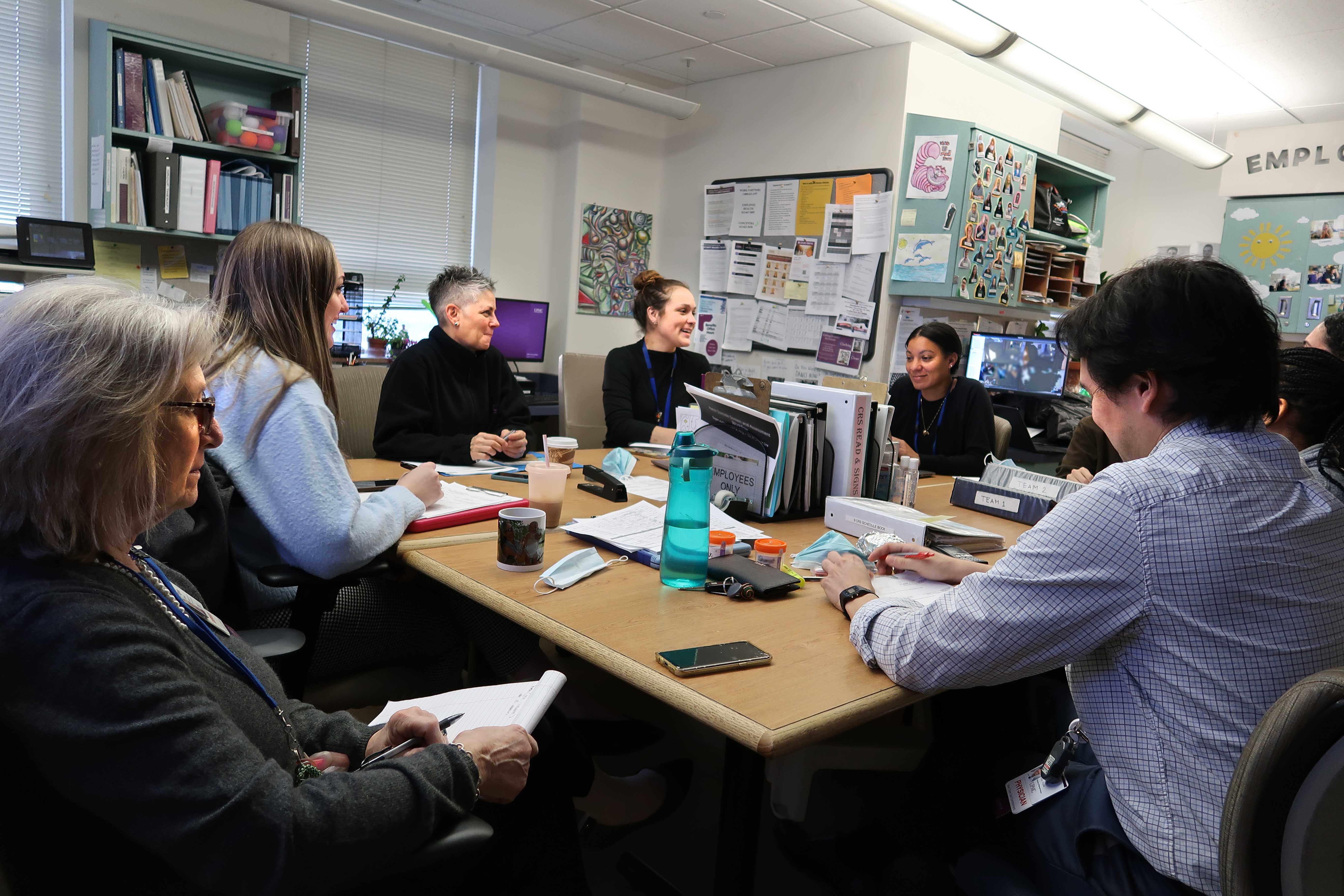 Our residents experience a rich assortment of supervisory opportunities, across all settings and levels of training. Faculty provide supervision of clinical cases, on an individual and group basis, with a focus on psychiatric formulation, safety assessment, brief psychotherapeutic interventions, and principles of psychopharmacology. Residents receive individual supervision of longitudinal psychotherapy cases from full-time and volunteer faculty, including analysts who are affiliated with the Pittsburgh Psychoanalytic Institute. Group supervision is provided for Interpersonal Therapy, Cognitive Behavioral Therapy, Group Therapy and Family Therapy, as part of the Residency Curriculum.
Call
During the first two years of training, our residents provide call coverage in the UPMC Western Psychiatric Hospital Psychiatric Emergency Services (“PES Call”), on our inpatient units (“Floor Call”), and as part of the PGY2 rotation in Consultation-Liaison (CL) Psychiatry (“CL Call”).
The PES Call resident evaluates patients in our free-standing psychiatric emergency department, during evening, overnight, or weekend shifts. First-year residents take call in the PES on a rotating basis, providing one week of nighttime coverage at a time, during their three-block emergency psychiatry rotation. Second year residents take evening or weekend call in the PES about every two weeks.
The Floor Call resident covers acute psychiatric and medical issues on the inpatient units at UPMC Western Psychiatric Hospital, during overnight, holiday, and weekend shifts. First year residents complete Floor Call primarily as two separated two-week blocks of night float (five nights per week). In addition, first-year residents complete approximately three weekend Floor Call shifts per month, during their psychiatry rotations outside of the PES and while on the Medical Care of the Psychiatric Patient (MCPP) rotation. Second-year residents complete Floor Call, on average, once every ten weeks.
During the Consultation-Liaison (CL) Psychiatry rotation, second year residents rotate duties for CL Call, including after-hours phone coverage, in-house psychiatric evaluation as needed, and weekend coverage in the general hospital. PGY2 residents are excused from Floor and PES Call during the CL Psychiatry rotation. Third-year and fourth-year residents are free from call.
Mentorship
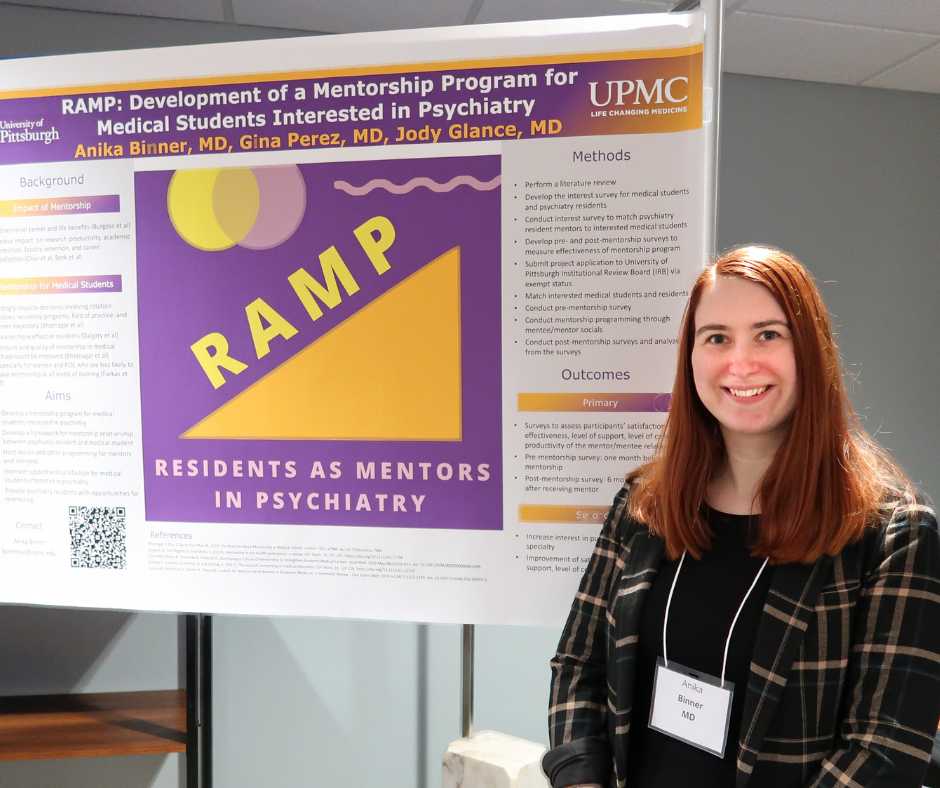
A formal Faculty-Resident Mentorship program facilitates a smooth transition into the training experience at UPMC Western Psychiatric Hospital. Incoming residents are assigned respective faculty mentors, who are eager to provide their time, professional expertise, and guidance. This program allows residents and their mentors to meet informally to discuss both personal and professional interests, with the goal of forming a mentorship relationship that can last the duration of one’s residency training. Read more about the mentorship program at the UPMC Western Psychiatric Hospital.
Residents as Teachers
Residents at the UPMC Western Psychiatric Hospital have many opportunities to develop and cultivate teaching skills. In addition to informal teaching on the inpatient units, residents are encouraged to serve as facilitators in the second-year medical student Psychopathology seminars, as well as instructors for the third-year medical student Psychiatry Clerkship Curriculum. Our Child and Adolescent Psychiatry Fellows may also teach as part of the core child psychiatry curriculum to our PGY2 residents.
Housestaff Organization
The UPMC Western Psychiatric Hospital Housestaff Organization is an active resident-run community with weekly lunchtime meetings for residents to gather and discuss training issues. This time is also used for guest lectures and monthly meetings with the Department Chairman and service chiefs. Each month, Housestaff Officers and Class Representatives meet with Training Directors to discuss resident concerns. The Housestaff Organization holds an annual Resident Retreat, which generates suggestions for change that are rapidly incorporated into the program, in addition to an annual holiday party and various Resident-Faculty Mixers.
Moonlighting
Moonlighting is permitted by the residency program, starting in the second year of training, and serves to augment a resident’s learning experience and income. Many residents find positions at community mental health clinics in the Pittsburgh area, or moonlighting opportunities within the UPMC Western Psychiatric Hospital system. These experiences include performing child psychiatry assessments, providing coverage on the Psychiatry CL Service, completing emergency psychiatry evaluations in the PES, undertaking geriatric in-home assessments, or serving as a primary psychiatrist at a community program.