

Value of Mentoring
The Importance of Mentoring in the Clinician-Educator Pathway
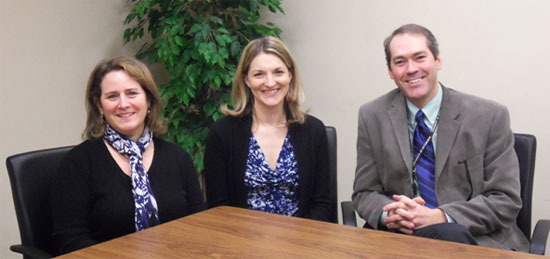
Holly A. Swartz, MD, Jody Glance, MD and James Tew, MD
Mentoring is an essential component of career development for psychiatric faculty in the clinician-educator (C-E) pathway. In contrast to research faculty who routinely acquire a mentor in the context of their laboratory or clinical research work, most C-E faculty do not actively seek mentoring relationships or understand the potential importance of mentors in their professional lives. And yet, mentors are invaluable in helping C-E faculty acquire new skills, network with career-expanding colleagues, and navigate the challenges associated with C-E career advancement. Using as a case example a faculty member who has successfully navigated the transition from residency to C-E faculty with the assistance of mentors, we identify a set of core principles that characterize effective C-E mentoring, discuss challenges in the mentoring experience, and articulate strategies for initiating a C-E mentoring relationship.
Seeking guidance from senior colleagues in a specific content area comes easily to many new C-E faculty, as they have been in the student role for many years by the time they graduate from residency. However, C-E mentors also function as sponsors, coaches, advisors, and role models. In the experience of new C-E faculty member, Jody Glance, M.D., some of the most helpful mentoring moments were not necessarily clinical advising, but rather being given ?stretch assignments? ? that is, academic undertakings that felt slightly beyond her current skill level. Under the close guidance of senior faculty mentors, she was able to co-author a journal article, co-lead a full day workshop in her area of interest, and assist with two federally-funded research studies, all within the first year following residency training. Such productivity would not have been possible without mentors who were willing to invest the time required to help her develop these skills.
Although it is important for C-E faculty to incorporate mentorship into their career plan, they should do so wisely. Like any other relationship, it is essential to evaluate potential mentors to determine whether or not s/he is likely to be a good fit for you. For instance, it is helpful to consider the mentor?s own stage of career development: those who are too junior may be still in the process of ?learning the ropes? while those who are too senior may be overextended. It is also helpful to understand potential mentor?s mentoring style. For instance, some mentors may be too directive for your tastes, while 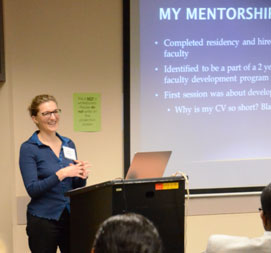 others may not provide you with enough structure. Finally, it is important to avoid mentors who seek to create replicas of themselves or use mentees to do unwanted ?scut? work. Asking other mentees about their experiences with a potential mentor is a good way to learn about mentoring styles. Dr. Glance values her mentors precisely because they provide her with a good mix of autonomy and guidance. She has sought mentoring from senior faculty members who are able to provide networking opportunities as well as midlevel faculty who helped her evaluate the opportunities being presented, including which opportunities to accept and which to put on hold (or decline).
Mentoring takes many forms. And, indeed, it is often difficult for a single individual to fill all of those mentoring roles. Many faculty members will organize a ?personal mosaic of experts and guides? to collectively fill their mentoring needs. Dr. Glance?s mentoring team consists of a supervisor who provides guidance on clinical and administrative matters within her clinic, a senior Professor with a background in social work who offers a non-physician?s perspective while providing coaching on writing and teaching skills, and a mid-career faculty member not affiliated with her clinic who can take a broad view of her academic activities to help shape her career and professional life. Additionally, she has found peer mentorship to be an invaluable resource, as she has collaborated with other junior faculty on curriculum development projects and writing case series. It is important to recognize that establishing a mentoring team does not happen immediately; in the case of Dr. Glance, it has been a gradual process of selecting appropriate mentors over the course of a few years.
Mentees should take an active role in shaping their mentoring experience, working with their mentor to define both overarching career goals and concrete steps that are needed to reach those goals. Perhaps most importantly, mentees should identify concrete ?deliverables? (i.e., written case reports, curricula, poster presentations) that will contribute to reaching each goal and a time frame for their production. One of the jobs of a mentor is to hold you accountable, therefore you will be more likely to produce academic products when you have a mentor to help you. In an academic medical center, having academic products on your C.V. matter for promotion and professional recognition. They also ensure the development of critical academic skills (writing, presenting, and collaboration with one?s colleagues) that will make the C-E faculty member a more effective mentor to others in the future. If these are your goals, then a mentor?or collection of mentors?will help you achieve them.