University of Pittsburgh logo
Department of Psychiatry
University of Pittsburgh logo
Information for You
  • Faculty & Staff
  • Prospective Trainees
  • Investigators
  • Patients & Families
Our People
Menu
  • Education
    • Education Overview
    • Residency & Fellowships
    • Research Training
    • Medical Student Education
    • Clinical Psychology Internship
    • Clinician Career Development
  • Research
    • Research Overview
    • Research Faculty
    • Research Training
    • Investigator Resources
    • Health Equity Research
    • Participate in Research
  • Patient Care
    • Patient Care Overview
    • Access to Care
    • Clinical Services Overview
    • Clinical Faculty
    • Resources for Clinicians
  • Community & Culture
    • Community & Culture Overview
    • Leadership & Advisory Council
    • Research Equity & Community Health (REACH)
    • Community & Partnership
    • Community News
  • About Us
    • About Us Overview
    • Chair's Message
    • Our People
    • Our History, Our Present, & Our Future
    • Life in Pittsburgh
  • News & Events
    • News & Events Overview
    • News
    • Events
  • Information for You
    • Faculty & Staff
    • Prospective Trainees
    • Investigators
    • Patients & Families
  • Our People

Main menu

  • Education
    • Residency & Fellowships
      • Residency Training
      • Training Pathways & Concentrations
      • Clinical Fellowships
      • Our Clinical Learning Environment
      • Our Leadership
      • Our Chief Residents
      • Our Residents
    • Research Training
      • Undergraduate & Graduate Student Training
      • Medical Student Research
      • Research During Residency
      • Postdoctoral Training
      • Medical Student Education
      • Clinical Psychology Internship
      • Clinician Career Development
  • Research
    • Research Training
      • Undergraduate & Graduate
      • Medical Student Research
      • Research During Residency
      • Postdoctoral Training
    • Investigator Resources
      • Research Day
      • Research Review Committee
      • Assessment Instruments
    • Health Equity Research
      • REACH Collaborative
      • Research Faculty
      • Participate in Research
  • Patient Care
      • Access to Care
      • Clinical Services Overview
      • Clinical Faculty
      • Resources for Clinicians
  • Community & Culture
  • About Us
    • Our People
      • Faculty
      • Staff
      • Emeritus Faculty
      • Chair's Message
      • Our History, Our Present, & Our Future
      • Life in Pittsburgh
  • News & Events
      • News
      • Events
  • Search

Breadcrumb menu

  1. Home
  2. News
  • December 18, 2015
  • Share on LinkedIn
  • Share on Bluesky
  • Share on Facebook
  • Share on Threads
  • Share via email

Hot Publication

White Matter Hyperintensity Accumulation during Treatment of Late-Life Depression
Khalaf A, Edelman K, Tudorascu D, Andreescu C, Reynolds CF and Aizenstein H
Neuropsychopharmacology. 40:3027-3035, 2015


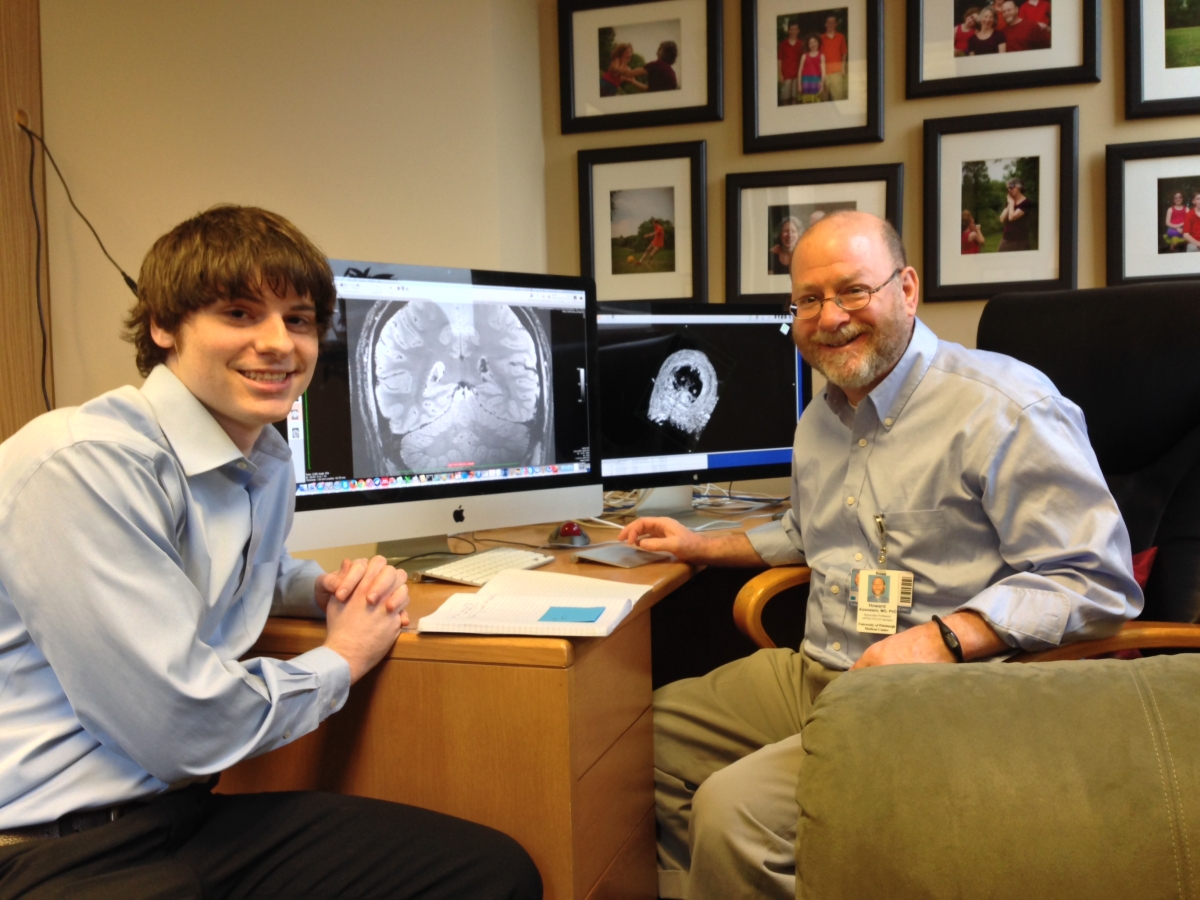
White matter hyperintensities (WMHs) have been shown to be associated with the development of late-life depression and eventual treatment outcomes.  In a study led by University of Pittsburgh medical student Alexander Khalaf and his mentor, Dr. Howard Aizenstein (pictured above), investigators examined longitudinal WMH changes in patients with late life depression during a 12-week antidepressant treatment course. 

A total of 47 depressed elderly patients started pharmacological treatment for depression shortly after a baseline magnetic resonance imaging (MRI) scan. At 12 weeks, patients underwent a follow-up MRI scan and were categorized as either treatment remitters (n=23) or non-remitters (n=24). Among all patients, there was as a significant increase in WMHs over 12 weeks. When patients were stratified by remission status, non-remitters demonstrated a significant increase in WMHs, but this was not observed in remitters.  The investigators also examined other markers of brain integrity including whole brain gray matter volume, hippocampal volume, and fractional anisotropy. They observed no significant differences in any of these markers during treatment, including when patients were stratified based on remission status. 

This is the first study to demonstrate similar findings over a short interval (i.e. 12 weeks), which corresponds to the typical length of an antidepressant trial.  The results of this project not only add to existing literature showing the association between WMH accumulation and late life depression treatment outcomes, they also highlight the acute interplay of cerebrovascular ischemic disease and late life depression.

Contributors:
Alexander Khalaf, BS, Kathryn Edelman, MS, Dana Tudorascu, PhD, Carmen Andreescu, MD, Charles F Reynolds III, MD, PhD and Howard Aizenstein, MD, PhD (Department of Psychiatry, University of Pittsburgh School of Medicine)

This article appeared in the journal Neuropsychopharmacology.  Click here to view the abstract.

University of Pittsburgh logo

Stay connected

  • LinkedIn
  • Bluesky
  • Instagram
  • Facebook
  • Threads

Location

Thomas Detre Hall
3811 O'Hara Street
Pittsburgh, PA 15213
  • Contact Us

Related Websites

  • medschool.pitt.edu
  • pitt.edu

Explore

  • Find People
  • Education
  • Research
  • Patient Care
  • Community & Culture
  • About Us
  • News and Events

Information for

  • Faculty & Staff
  • Prospective Trainees
  • Investigators
  • Patients & Families

Intranet Sites

  • Psy Hub for faculty (requires UPMC log-in and UPMC computer or access through MyApps)
  • Postdoc Portal Postdoc Portal for postdoctoral trainees
  • Office of Grants and Contracts (OGC) website accessible on internal network only

Join Our Newsletter

Stay up to date on department and faculty happenings.

University of Pittsburgh Department of Psychiatry mailing list Fill in the form to subscribe to the mailing list.

Psychiatry Advances Podcast

Covering Innovative research and patient-centered programs.

Listen to Podcast

© 2026 University of Pittsburgh Department of Psychiatry