
Journal of the American Academy of Child & Adolescent Psychiatry—Bridging Gaps in Care Following Hospitalization for Suicidal Adolescents: As Safe as Possible (ASAP) and BRITE App
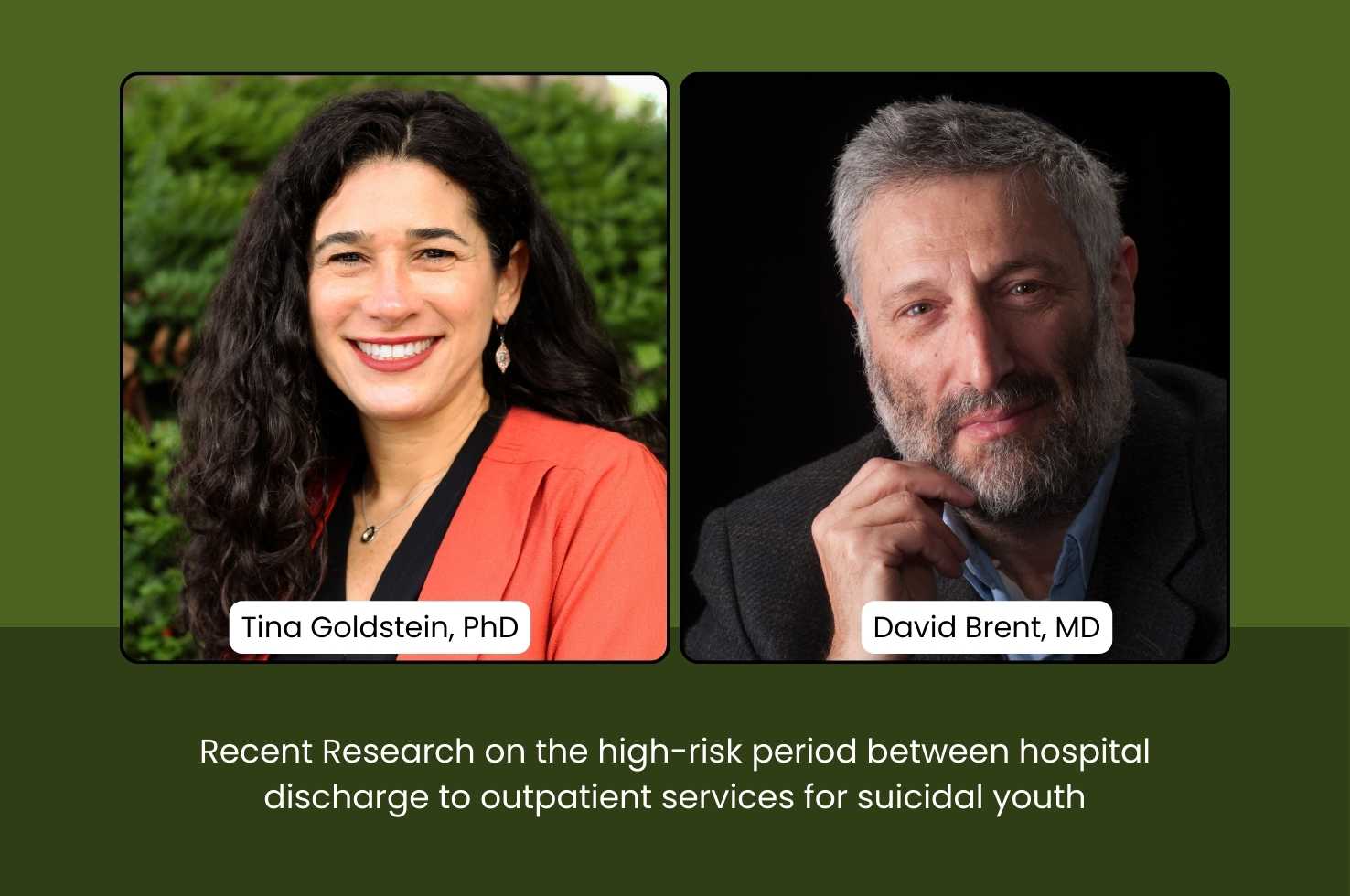
Over the past decade, rates of suicidal ideation and behavior in American adolescents have increased dramatically. One strategy for preventing suicide is to develop interventions for use during elevated risk periods, such as immediately following inpatient discharge for suicidal adolescents. The time during and immediately after hospital discharge offers a critical window to enhance vulnerable youths’ coping skills before, and upon, returning to the community.
In a prior pilot randomized study, investigators tested the feasibility of As Safe As Possible (ASAP, an intervention delivered to suicidal youth during inpatient treatment), combined with a digital app, BRITE (includes mood self-monitoring, an individualized safety plan, and personalized skills related to ASAP treatment targets), to reduce suicide risk post discharge. The combination of BRITE and ASAP halved the suicide attempt rate in the six months post discharge, but the study did not examine the effects of ASAP and BRITE separately. To further this work, investigators including Tina Goldstein, PhD (Pittsburgh Foundation Endowed Professor in Psychiatry Research and Professor of Psychiatry and Associate Professor of Psychology); Rachel Vaughn-Coaxum, PhD (Assistant Professor of Psychiatry); Antoine Douaihy, MD (Professor of Psychiatry and Medicine); Candice Biernesser, PhD (Assistant Professor of Psychiatry); and David Brent, MD (Distinguished Professor of Psychiatry, Pediatrics, Epidemiology, and Clinical and Translational Science and Endowed Chair in Suicide Studies), conducted a larger randomized clinical trial to assess the relative efficacy of both ASAP and BRITE alone—as well as in combination with each other—on suicide attempts, suicidal ideation, non-suicidal self-injury, re-hospitalizations, and suicidal events among adolescents.
“By investigating the relative contribution of individual treatment components in this study, we aimed to further inform brief, accessible treatment options to help bridge the high-risk period between hospital discharge to outpatient services for suicidal youth,” said Dr. Goldstein, first and corresponding author of the study, which was recently published in the Journal of the American Academy of Child & Adolescent Psychiatry.
Study participants included 240 adolescents who were hospitalized for suicidal ideation with plan and/or intent, and/or suicide attempt. Participants were assigned to one of four treatment conditions: 1) a combination of ASAP, BRITE, and treatment as usual; 2) BRITE and treatment as usual; 3) ASAP and treatment as usual; or 4) treatment as usual alone. Participants’ suicidal ideation and behavior were assessed at four, 12, and 24 weeks using the Columbia–Suicide Severity Rating Scale (C-SSRS), and re-hospitalization using the Child and Adolescent Services Assessment (CASA). The two primary outcomes were suicidal behavior and re-hospitalization.
The combination reduced the risk of a suicide attempt by 60%, but this was not statistically significant. Youth admitted to the hospital for a suicide attempt who received BRITE were much less likely to engage in suicidal behavior. Those who received ASAP were less likely to be re-hospitalized.
“Since preventing re-hospitalization and future suicidal behavior are both important outcomes, we conclude that the combination of ASAP and BRITE will result in the best outcomes when added to usual care,” said Dr. Brent, the study’s senior author. “We are grateful to our study team at UPMC, our collaborators at the University of Texas, Southwestern Medical Center led by Dr. Betsy Kennard, as well as the American Foundation for Suicide Prevention for their funding and support of this study.”
Goldstein TR, Kennard BD, Porta G, Miller AO, Aguilar K, Bigley K, Vaughn-Coaxum RA, McMakin DL, Douaihy A, Iyengar S, Biernesser CL, Zelazny J, Brent DA
Journal of the American Academy of Child & Adolescent Psychiatry 2024 Jul 18:S0890-8567(24)00361-7. doi: 10.1016/j.jaac.2024.06.008