

The Developmental Affective Neuroscience Symposium: Presenting Translational Research in Developmental Psychopathology
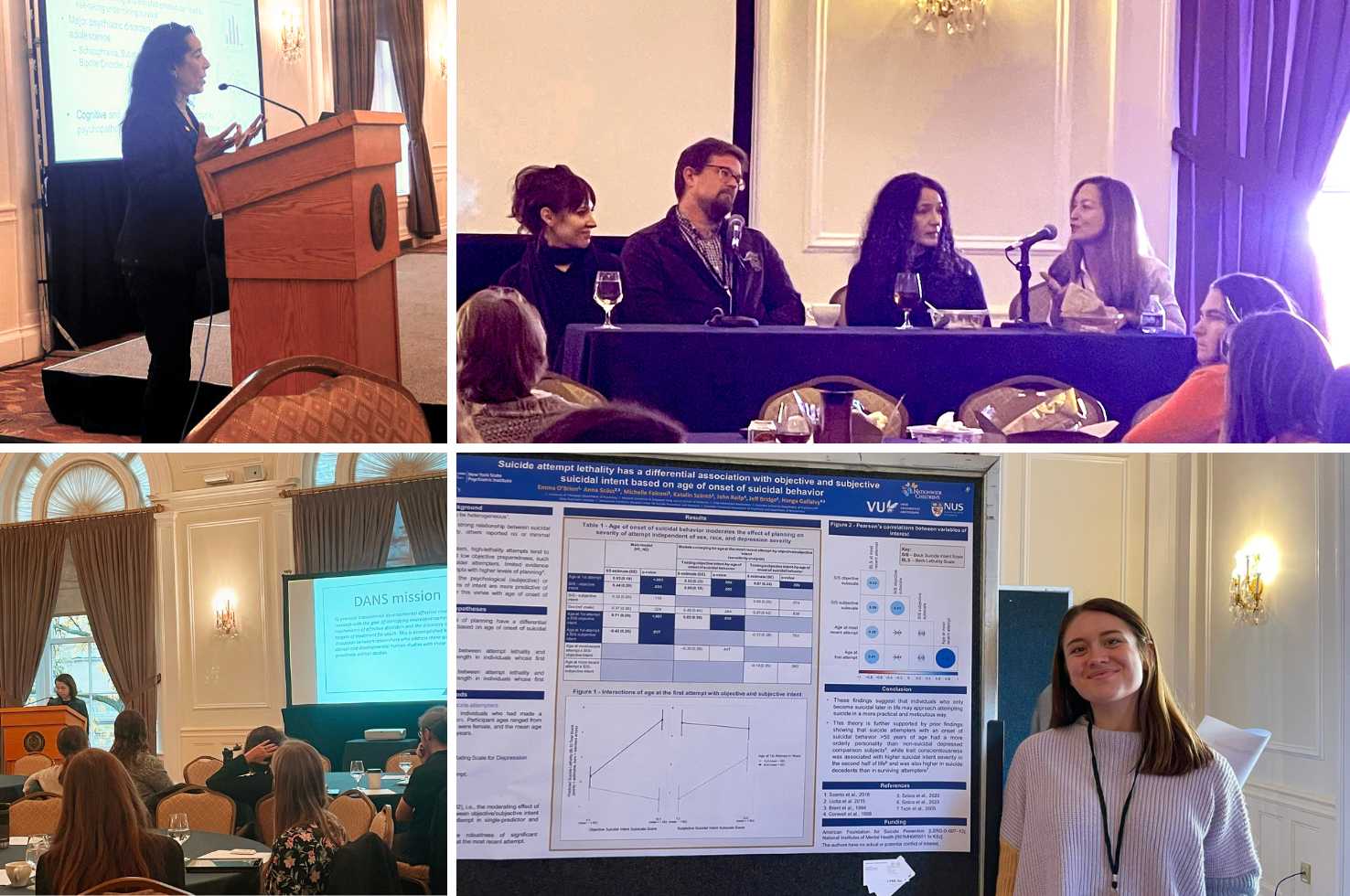
The Developmental Affective Neuroscience Symposium (DANS) presents recent translational research in developmental psychopathology. The 2023 DANS theme was “Neurodevelopment of Regulatory Systems: A Focus on Emotions and Motivation,” featuring research focused on the development of neural networks and circuitries implicated in regulating or modulating neural response to emotionally or motivationally salient information, and how alterations in the development of these neural networks/circuitries could contribute to increasing vulnerability or risk for affective psychopathology. This year, DANS hosted 141 attendees from across the country and Europe, including faculty, postdocs, graduate and undergraduate students, and research staff.
“While there has been much discussion around how to improve the translation of findings from animal models and human studies (and vice versa), several challenges remain in translational research, including the wide gap between researchers conducting preclinical animal studies and those conducting clinical human studies,” said DANS program chair, Cecile Ladouceur, PhD (Professor of Psychiatry and Psychology). DANS aims to bridge this gap through its mission to promote translational developmental affective neuroscience research with the goal of identifying neurodevelopmental mechanisms of affective disorders and the discovery of new effective targets of treatment and prevention for youth.
The event included a roundtable discussion with National Institute of Mental Health and National Institute on Drug Abuse program officers; keynote speakers from the University of Colorado, Yale, Emory, and Columbia Universities, Oregon Health & Science University, University of California, Los Angeles, and University of Illinois, Chicago; and presentations from Rising Star Scholars. DANS presentations ranged from basic (animal/human) to clinical, including neuroscience approaches such as functional magnetic resonance imaging (fMRI), electroencephalogram (EEG), as well as clinical and behavioral studies that are relevant to neuroscience models of affective development.
The following University of Pittsburgh faculty members presented their research:
-
Beatriz Luna, PhD (Distinguished Professor of Psychiatry and Professor of Psychology and Bioengineering and Staunton Professor of Pediatrics and Psychiatry) – Keynote Speaker: “Specialization of Frontostriatal Systems Through Adolescence”
-
Mary Woody, PhD (Assistant Professor of Psychiatry) – Rising Star Scholar: “Using Steady State Visual Evoked Potentials to Probe Affect-Biased Attention among Adolescent Girls at High Risk for Depression”
-
Shawn Sorrells, PhD (Assistant Professor of Neuroscience) – Keynote Speaker: “Immature Amygdala Excitatory Neurons Migrate and Mature During Adolescence in Humans and Mice”
“I was thrilled to see how many people participated in DANS this year and was impressed by the quality of the science presented by the keynote speakers and the rising star scholars. During the poster session, I was also very impressed by the research presented by talented trainees and early-career investigators. DANS could not happen without financial support and teamwork. I am extremely grateful for the financial support from the Department of Psychiatry as well as the Departments of Psychology, Neurobiology, and Neuroscience. I am also thankful to Amanda Trujillo for all the important behind-the-scenes administrative work, and for the program committee, who helped develop an outstanding program,” said Dr. Ladouceur.
The program committee includes Judy Cameron, PhD (Professor of Psychiatry, Neuroscience, Obstetrics-Gynecology Reproductive Sciences, Clinical and Translational Science, and Behavioral and Community Health Sciences); Erika Forbes, PhD (Professor of Psychiatry, Pediatrics, Psychology and Clinical and Translational Science); Neal Ryan, MD (Joaquim Puig-Antich Professor in Child and Adolescent Psychiatry and Professor of Clinical and Translational Science); Judith Morgan, PhD (Associate Professor of Psychiatry and Psychology); Rui Peixoto, PhD (Assistant Professor of Psychiatry); and Jennifer Silk, PhD (Professor of Psychology and Psychiatry).