University of Pittsburgh logo
Department of Psychiatry
University of Pittsburgh logo
Information for You
  • Faculty & Staff
  • Prospective Trainees
  • Investigators
  • Patients & Families
Our People
Menu
  • Education
    • Education Overview
    • Residency & Fellowships
    • Research Training
    • Medical Student Education
    • Clinical Psychology Internship
    • Clinician Career Development
  • Research
    • Research Overview
    • Research Faculty
    • Research Training
    • Investigator Resources
    • Health Equity Research
    • Participate in Research
  • Patient Care
    • Patient Care Overview
    • Access to Care
    • Clinical Services Overview
    • Clinical Faculty
    • Resources for Clinicians
  • Community & Culture
    • Community & Culture Overview
    • Leadership & Advisory Council
    • Research Equity & Community Health (REACH)
    • Community & Partnership
    • Community News
  • About Us
    • About Us Overview
    • Chair's Message
    • Our People
    • Our History, Our Present, & Our Future
    • Life in Pittsburgh
  • News & Events
    • News & Events Overview
    • News
    • Events
  • Information for You
    • Faculty & Staff
    • Prospective Trainees
    • Investigators
    • Patients & Families
  • Our People

Main menu

  • Education
    • Residency & Fellowships
      • Residency Training
      • Training Pathways & Concentrations
      • Clinical Fellowships
      • Our Clinical Learning Environment
      • Our Leadership
      • Our Chief Residents
      • Our Residents
    • Research Training
      • Undergraduate & Graduate Student Training
      • Medical Student Research
      • Research During Residency
      • Postdoctoral Training
      • Medical Student Education
      • Clinical Psychology Internship
      • Clinician Career Development
  • Research
    • Research Training
      • Undergraduate & Graduate
      • Medical Student Research
      • Research During Residency
      • Postdoctoral Training
    • Investigator Resources
      • Research Day
      • Research Review Committee
      • Assessment Instruments
    • Health Equity Research
      • REACH Collaborative
      • Research Faculty
      • Participate in Research
  • Patient Care
      • Access to Care
      • Clinical Services Overview
      • Clinical Faculty
      • Resources for Clinicians
  • Community & Culture
  • About Us
    • Our People
      • Faculty
      • Staff
      • Emeritus Faculty
      • Chair's Message
      • Our History, Our Present, & Our Future
      • Life in Pittsburgh
  • News & Events
      • News
      • Events
  • Search

Breadcrumb menu

  1. Home
  2. Research
  3. Research Training
  4. Research During Residency
  5. Structure

Research

  • Research Faculty
  • Research Training
    • Undergraduate & Graduate
    • Medical Student Research
    • Research During Residency
      • How to Apply
      • Structure
      • Mentorship
      • Resident Biographies
      • After Graduation
      • Resources
      • Contact
    • Postdoctoral Training
  • Investigator Resources
  • Health Equity Research
  • Participate in Research

Structure

Finding a Mentor

Through our mentor matching program, as well as ongoing discussions with PRP leadership, you will be connected with a mentor who is well equipped to guide your project selection and promote your individual research development. 

Time for Research

Protected research time is essential for PRP residents to develop an exciting research project, learn new research methods, present results at national conferences, and publish manuscripts. You can expect the following research time during your training:
 

  • PGY1: Time available during rotations at UPMC Western Psychiatric Hospital and the VA for you to meet with potential mentors, attend lab meetings, plan research projects, and more.
  • PGY2: Fully protected (100% time) 10-week research block. 
  • PGY3: Fully protected 50% time (2.5 weekdays) for research.
  • PGY4 (or PGY5 for Child Track): Fully protected 80% time (4 weekdays) for research.

Sample PGY3 Schedule

  Mon Tues Weds Thurs Fri
AM ½ year: Research
½ year: Geriatric clinic
½ year: Research
½ year: VA PTSD elective
Full year: General adult clinic Full year: Research Full year: Research
PM Full year: Psychosis clinic Full year: Research Full year: Research + therapy patient Didactics ½ year: Child clinic
½ year: Research


Shinny-Yi  (Cindy) Chou, MD, PhD
Shinnyi (Cindy) Chou, MD, PhD

"One of the highlights during my PGY2 year was the opportunity to participate in the Psychiatry Research Pathway's 10-week research elective. The dedicated research time allowed me to immerse myself fully back into my research routines, reconnect with my curiosities, and refuel my excitement for running experiments. I was able to complete a small set of experiments that supplemented one of our residency graduate K-award fellow's research Aims, which gave me the opportunity to co-author a publication. I found the time to be productive, and it served as a launching point that generated more questions and ideas, which I have continued to pursue since." - Shinnyi (Cindy) Chou, MD, PhD (Assistant Professor of Psychiatry) 


Financial Support

All PRP residents are guaranteed up to $20,000 for research expenses during residency, with the opportunity for additional funds amount based on specific research needs. You can use funds towards conference travel, research equipment (e.g., a laptop), statistical software, etc. 

Career Development and Networking

Annual Fall PRP Symposium: This half-day symposium provides you with the opportunity to present your work to an audience of fellow residents, faculty mentors, and other members of our career development community. All PRP residents are required to present their research at this event.


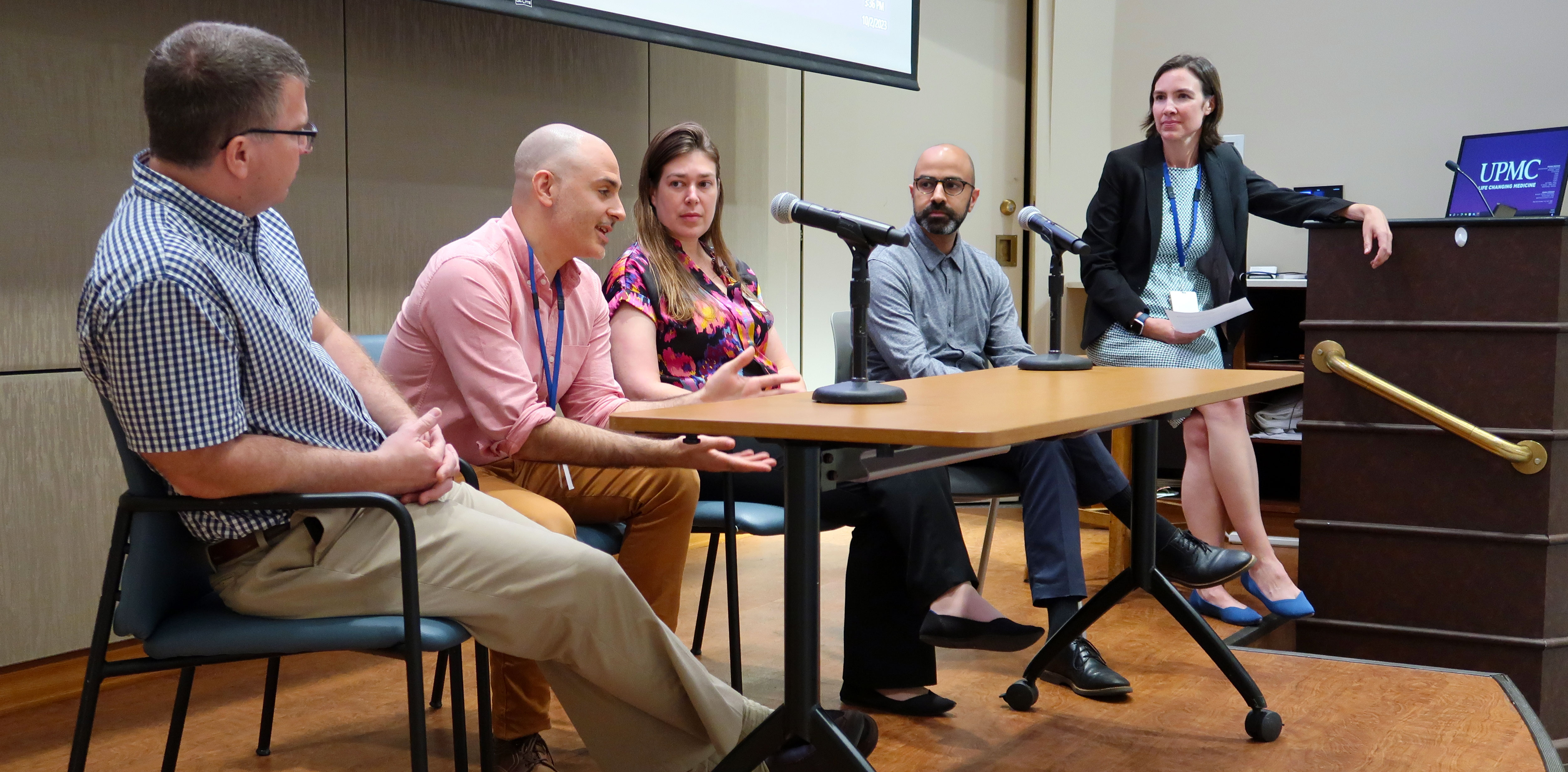
Physician-Scientist Career Panel Discussants at the 2023 PRP Symposium

Department of Psychiatry Annual Research Day: This event, held annually in June, enables you to showcase your research in a poster presentation, build new collaborations, and network with faculty, postdoctoral scholars, and other trainees. All PRP residents are required to present a poster at Research Day.

Ongoing meetings with PRP Leadership: You will have bi-annual check-in meetings with Dr. Hafeman. PRP leadership, including Dr. Hafeman and PRP chief residents, are available on an ongoing basis to discuss research interests, career development topics, or anything else.

Career and Research Development Seminar (CARDS) Series: The CARD seminar is a weekly series for postdoctoral trainees’ grantsmanship and career development skills. You may participate in this seminar during your final year of residency  to prepare for and get valuable feedback on funding applications.


University of Pittsburgh logo

Stay connected

  • LinkedIn
  • Bluesky
  • Instagram
  • Facebook
  • Threads

Location

Thomas Detre Hall
3811 O'Hara Street
Pittsburgh, PA 15213
  • Contact Us

Related Websites

  • medschool.pitt.edu
  • pitt.edu

Explore

  • Find People
  • Education
  • Research
  • Patient Care
  • Community & Culture
  • About Us
  • News and Events

Information for

  • Faculty & Staff
  • Prospective Trainees
  • Investigators
  • Patients & Families

Intranet Sites

  • Psy Hub for faculty (requires UPMC log-in and UPMC computer or access through MyApps)
  • Postdoc Portal Postdoc Portal for postdoctoral trainees
  • Office of Grants and Contracts (OGC) website accessible on internal network only

Join Our Newsletter

Stay up to date on department and faculty happenings.

University of Pittsburgh Department of Psychiatry mailing list Fill in the form to subscribe to the mailing list.

Psychiatry Advances Podcast

Covering Innovative research and patient-centered programs.

Listen to Podcast

© 2026 University of Pittsburgh Department of Psychiatry