University of Pittsburgh logo
Department of Psychiatry
University of Pittsburgh logo
Information for You
  • Faculty & Staff
  • Prospective Trainees
  • Investigators
  • Patients & Families
Our People
Menu
  • Education
    • Education Overview
    • Residency & Fellowships
    • Research Training
    • Medical Student Education
    • Clinical Psychology Internship
    • Clinician Career Development
  • Research
    • Research Overview
    • Research Faculty
    • Research Training
    • Investigator Resources
    • Health Equity Research
    • Participate in Research
  • Patient Care
    • Patient Care Overview
    • Access to Care
    • Clinical Services Overview
    • Clinical Faculty
    • Resources for Clinicians
  • Community & Culture
    • Community & Culture Overview
    • Leadership & Advisory Council
    • Research Equity & Community Health
    • Community & Partnership
    • Community News
    • Community Awards & Accolades
  • About Us
    • About Us Overview
    • Chair's Message
    • Our People
    • Our History, Our Present, & Our Future
    • Life in Pittsburgh
  • News & Events
    • News & Events Overview
    • News
    • Events
  • Information for You
    • Faculty & Staff
    • Prospective Trainees
    • Investigators
    • Patients & Families
  • Our People

Main menu

  • Education
    • Residency & Fellowships
      • Residency Training
      • Training Pathways & Concentrations
      • Clinical Fellowships
      • Our Clinical Learning Environment
      • Our Leadership
      • Our Chief Residents
      • Our Residents
    • Research Training
      • Undergraduate & Graduate Student Training
      • Medical Student Research
      • Research During Residency
      • Postdoctoral Training
      • Medical Student Education
      • Clinical Psychology Internship
      • Clinician Career Development
  • Research
    • Research Training
      • Undergraduate & Graduate
      • Medical Student Research
      • Research During Residency
      • Postdoctoral Training
    • Investigator Resources
      • Research Day
      • Research Review Committee
      • Assessment Instruments
    • Health Equity Research
      • REACH Collaborative
      • Research Faculty
      • Participate in Research
  • Patient Care
      • Access to Care
      • Clinical Services Overview
      • Clinical Faculty
      • Resources for Clinicians
  • Community & Culture
      • Leadership & Advisory Council
      • Research Equity & Community Health
      • Community & Partnership
      • Community News
      • Community Awards & Accolades
  • About Us
    • Our People
      • Faculty
      • Staff
      • Emeritus Faculty
      • Chair's Message
      • Our History, Our Present, & Our Future
      • Life in Pittsburgh
  • News & Events
      • News
      • Events
  • Search

Breadcrumb menu

  1. Home
  2. News
  • October 14, 2022
  • Share on LinkedIn
  • Share on Bluesky
  • Share on Facebook
  • Share on Threads
  • Share via email

Biological Psychiatry: Rapid Eye Movement Sleep Engages Melanin-Concentrating Hormone Neurons to Reduce Cocaine Seeking
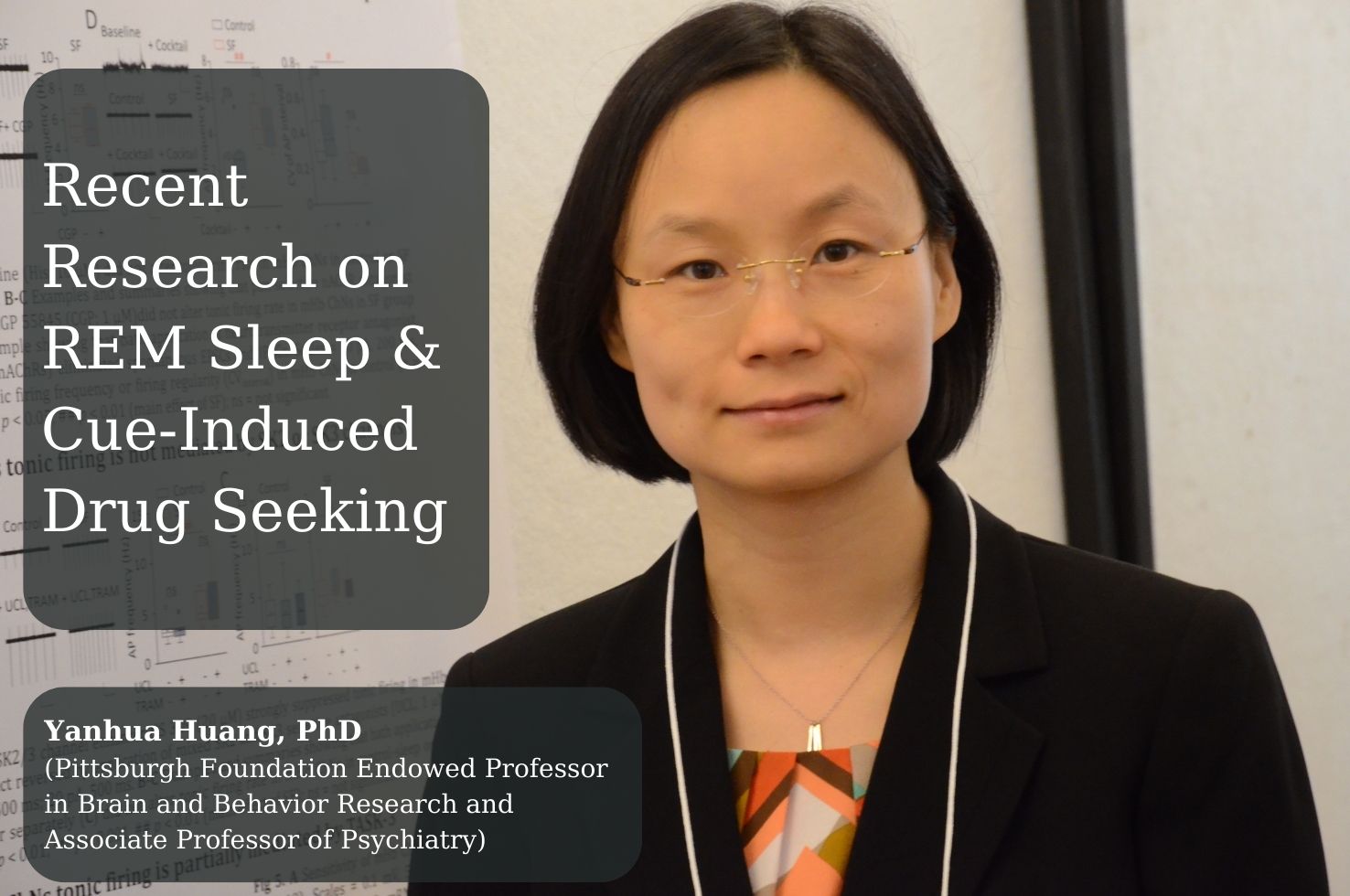
Substance use relapse is a major barrier in treating substance use disorders. Withdrawal from substance use often causes sleep disruptions, which can aggravate withdrawal symptoms and increase the likelihood of relapse. A group of investigators, including Pitt Psychiatry scientists Rong Guo, PhD (Scientist, Allen Institute; former Pitt Psychiatry postdoctoral scholar), Yao Wang, PhD (Research Assistant Professor of Psychiatry), and Yanhua Huang, PhD (Pittsburgh Foundation Endowed Professor in Brain and Behavior Research and Associate Professor of Psychiatry), examined the correlations between the intensity of cocaine seeking and key sleep features. They published the results in Biological Psychiatry. 

The investigators trained male rats to self-administer cocaine. After long-term withdrawal, the scientists tested for causal relationships using behavioral, chemogenetic, or optogenetic methods to selectively increase rapid eye movement (REM) sleep. They then measured behavioral and electrophysiological outcomes to probe for cellular and circuit mechanisms underlying REM sleep-mediated regulation of cocaine seeking. 

Findings from the study showed that a selective set of REM sleep features were preferentially associated with the intensity of cue-induced cocaine seeking after drug withdrawal. The investigators also found that selectively increasing REM sleep time and continuity by environmental warming attenuated a withdrawal time-dependent intensification of cocaine seeking, suggesting that REM sleep may increase the likelihood of withdrawal and vulnerability to relapse. In addition, warming increased the activity of lateral hypothalamic melanin-concentrating hormone (MCH) neurons during prolonged REM sleep episodes and counteracted cocaine-induced synaptic accumulation of calcium-permeable AMPA receptors in the nucleus accumbens, indicating that MCH neuron activities can be selectively targeted during REM sleep to reduce substance use relapse. 

“These results highlight REM sleep and, in particular, MCH neuron activities in REM sleep, in regulating drug relapse, and provide an important rationale for therapeutic development in the future.” said Dr. Huang, the study’s senior author.

Rapid eye movement sleep engages melanin-concentrating hormone neurons to reduce cocaine seeking
Guo R, Wang Y, Yan R, Chen B, Ding W, Gorczyca MT, Ozsoy S, Cai L, Hines RL, Tseng GC, Allocca G, Dong Y, Fang J, Huang YH

Biological Psychiatry, June 13, 2022, https://doi.org/10.1016/j.biopsych.2022.06.006

University of Pittsburgh logo

Stay connected

  • LinkedIn
  • Bluesky
  • Instagram
  • Facebook
  • Threads

Location

Thomas Detre Hall
3811 O'Hara Street
Pittsburgh, PA 15213
  • Contact Us

Related Websites

  • medschool.pitt.edu
  • pitt.edu

Explore

  • Find People
  • Education
  • Research
  • Patient Care
  • Community & Culture
  • About Us
  • News and Events

Information for

  • Faculty & Staff
  • Prospective Trainees
  • Investigators
  • Patients & Families

Intranet Sites

  • Psy Hub for faculty (requires UPMC log-in and UPMC computer or access through MyApps)
  • Postdoc Portal Postdoc Portal for postdoctoral trainees
  • Office of Grants and Contracts (OGC) website accessible on internal network only

Join Our Newsletter

Stay up to date on department and faculty happenings.

University of Pittsburgh Department of Psychiatry mailing list Fill in the form to subscribe to the mailing list.

Psychiatry Advances Podcast

Covering Innovative research and patient-centered programs.

Listen to Podcast

© 2026 University of Pittsburgh Department of Psychiatry