University of Pittsburgh logo
Department of Psychiatry
University of Pittsburgh logo
Information for You
  • Faculty & Staff
  • Prospective Trainees
  • Investigators
  • Patients & Families
Our People
Menu
  • Education
    • Education Overview
    • Residency & Fellowships
    • Research Training
    • Medical Student Education
    • Clinical Psychology Internship
    • Clinician Career Development
  • Research
    • Research Overview
    • Research Faculty
    • Research Training
    • Investigator Resources
    • Health Equity Research
    • Participate in Research
  • Patient Care
    • Patient Care Overview
    • Access to Care
    • Clinical Services Overview
    • Clinical Faculty
    • Resources for Clinicians
  • Community & Culture
    • Community & Culture Overview
    • Leadership & Advisory Council
    • Research Equity & Community Health
    • Community & Partnership
    • Community News
    • Community Awards & Accolades
  • About Us
    • About Us Overview
    • Chair's Message
    • Our People
    • Our History, Our Present, & Our Future
    • Life in Pittsburgh
  • News & Events
    • News & Events Overview
    • News
    • Events
  • Information for You
    • Faculty & Staff
    • Prospective Trainees
    • Investigators
    • Patients & Families
  • Our People

Main menu

  • Education
    • Residency & Fellowships
      • Residency Training
      • Training Pathways & Concentrations
      • Clinical Fellowships
      • Our Clinical Learning Environment
      • Our Leadership
      • Our Chief Residents
      • Our Residents
    • Research Training
      • Undergraduate & Graduate Student Training
      • Medical Student Research
      • Research During Residency
      • Postdoctoral Training
      • Medical Student Education
      • Clinical Psychology Internship
      • Clinician Career Development
  • Research
    • Research Training
      • Undergraduate & Graduate
      • Medical Student Research
      • Research During Residency
      • Postdoctoral Training
    • Investigator Resources
      • Research Day
      • Research Review Committee
      • Assessment Instruments
    • Health Equity Research
      • REACH Collaborative
      • Research Faculty
      • Participate in Research
  • Patient Care
      • Access to Care
      • Clinical Services Overview
      • Clinical Faculty
      • Resources for Clinicians
  • Community & Culture
      • Leadership & Advisory Council
      • Research Equity & Community Health
      • Community & Partnership
      • Community News
      • Community Awards & Accolades
  • About Us
    • Our People
      • Faculty
      • Staff
      • Emeritus Faculty
      • Chair's Message
      • Our History, Our Present, & Our Future
      • Life in Pittsburgh
  • News & Events
      • News
      • Events
  • Search

Breadcrumb menu

  1. Home
  2. News
  • August 17, 2022
  • Share on LinkedIn
  • Share on Bluesky
  • Share on Facebook
  • Share on Threads
  • Share via email

A Naturalistic Study of Emotion Dysregulation, Self-injurious Behavior & Aggression in Autistic Youth
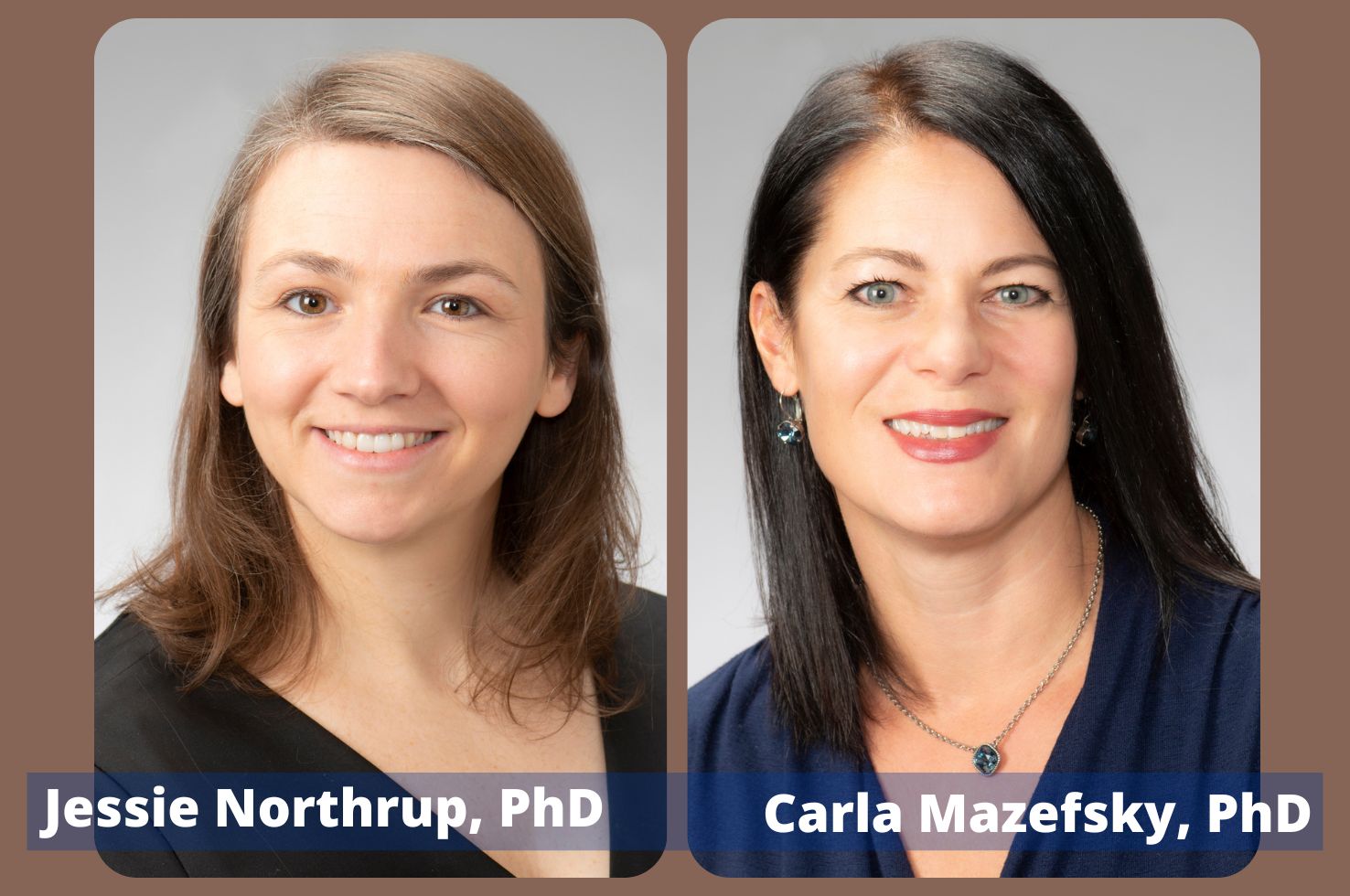
Investigators including Jessie Northrup, PhD (Assistant Professor of Psychiatry), and Carla Mazefsky, PhD (Professor of Psychiatry and Psychology), from Pitt Psychiatry, have conducted a study of how emotion dysregulation—challenges in modulating the intensity and duration of emotional reactions—may relate to aggressive or self-injurious behaviors in autistic individuals. The study, published in Autism Research, examined the real-time occurrence of aggressive or self-injurious behaviors during the daily activities of 53 psychiatrically hospitalized autistic youth. 

We spoke with Dr. Northrup, the study’s corresponding author, and Dr. Mazefsky, senior author, about their research.


Why study aggressive or self-injurious behaviors in particular?

Dr. Northrup: These two behaviors have an enormous impact on individual and family well-being, and can impose serious physical risks to the individual or the people around them. Autistic individuals are more likely than the general population to have difficulty with emotion regulation and to exhibit aggressive or self-injurious behaviors. However, surprisingly little is known about how emotion dysregulation plays a role in these behaviors. We wanted to learn whether aggressive and self-injurious behaviors were happening during times when individuals were visibly emotionally dysregulated. Considering the role of emotion dysregulation in self-injurious behavior and aggression has potential to enrich our assessment of and intervention strategies for these behaviors.

What is a major challenge with this research and how did you address it?

Dr. Northrup: Aggression and self-injurious behaviors can be difficult for scientists to observe because of their infrequent and unpredictable occurrence in everyday life. In this study, observing the behavior of autistic adolescents in psychiatric inpatient units enabled us to study how these behaviors occur in real time. We collected over 500 hours of observation and were able to observe more than 1,500 episodes of overt emotion dysregulation, more than 2,500 episodes of self-injurious behaviors, and more than 500 episodes of aggression. With this information, we had a rich opportunity to describe what these behaviors look like.

What did you find?

Dr. Mazefsky: Results from the study showed large individual variability in the frequency and duration of aggression and self-injurious behaviors and their co-occurrence. Both behaviors co-occurred with overt emotion dysregulation frequently enough to suggest emotional distress plays an important role in these behaviors. However, we also found substantial variability within and between individuals in co-occurrence, and self-injurious behaviors and aggression often (and for some individuals, almost always) occurred without visible signs of emotion dysregulation. Relatedly, analysis of the timing of these behaviors in relation to one another revealed that self-injurious behavior and aggression preceded emotion dysregulation more often than emotion dysregulation preceded self-injurious behavior and aggression. Importantly, it is possible that dysregulation may occur in the time preceding aggression more often than we can observe. In the future, we will examine how simultaneously recorded physiological reactivity relates to observed emotion dysregulation, self-injurious behaviors, and aggression in the present sample.

Mapping the time course of overt emotion dysregulation, self-injurious behavior, and aggression in psychiatrically hospitalized autistic youth: A naturalistic study
Northrup JB, Goodwin MS, Peura CB, Chen Q, Taylor BJ, Siegel MS, Mazefsky, CA

Autism Research,1–13 (2022) https://doi.org/10.1002/aur.2773NORTHRUPET AL.13

University of Pittsburgh logo

Stay connected

  • LinkedIn
  • Bluesky
  • Instagram
  • Facebook
  • Threads

Location

Thomas Detre Hall
3811 O'Hara Street
Pittsburgh, PA 15213
  • Contact Us

Related Websites

  • medschool.pitt.edu
  • pitt.edu

Explore

  • Find People
  • Education
  • Research
  • Patient Care
  • Community & Culture
  • About Us
  • News and Events

Information for

  • Faculty & Staff
  • Prospective Trainees
  • Investigators
  • Patients & Families

Intranet Sites

  • Psy Hub for faculty (requires UPMC log-in and UPMC computer or access through MyApps)
  • Postdoc Portal Postdoc Portal for postdoctoral trainees
  • Office of Grants and Contracts (OGC) website accessible on internal network only

Join Our Newsletter

Stay up to date on department and faculty happenings.

University of Pittsburgh Department of Psychiatry mailing list Fill in the form to subscribe to the mailing list.

Psychiatry Advances Podcast

Covering Innovative research and patient-centered programs.

Listen to Podcast

© 2026 University of Pittsburgh Department of Psychiatry