University of Pittsburgh logo
Department of Psychiatry
University of Pittsburgh logo
Information for You
  • Faculty & Staff
  • Prospective Trainees
  • Investigators
  • Patients & Families
Our People
Menu
  • Education
    • Education Overview
    • Residency & Fellowships
    • Research Training
    • Medical Student Education
    • Clinical Psychology Internship
    • Clinician Career Development
  • Research
    • Research Overview
    • Research Faculty
    • Research Training
    • Investigator Resources
    • Health Equity Research
    • Participate in Research
  • Clinical
    • Clinical Overview
    • Clinical Faculty
    • Schedule an Appointment
    • Clinical Services
    • Resources for Clinicians
  • Community & Culture
    • Community & Culture Overview
    • Leadership & Advisory Council
    • Research Equity & Community Health (REACH)
    • Community & Partnership
    • Community News
  • About Us
    • About Us Overview
    • Chair's Message
    • Our People
    • Our History, Our Present, & Our Future
    • Life in Pittsburgh
  • News & Events
    • News & Events Overview
    • News
    • Events
  • Information for You
    • Faculty & Staff
    • Prospective Trainees
    • Investigators
    • Patients & Families
  • Our People

Main menu

  • Education
    • Residency & Fellowships
      • Residency Training
      • Training Pathways & Concentrations
      • Clinical Fellowships
      • Our Clinical Learning Environment
      • Our Leadership
      • Our Chief Residents
      • Our Residents
    • Research Training
      • Undergraduate & Graduate Student Training
      • Medical Student Research
      • Research During Residency
      • Postdoctoral Training
      • Medical Student Education
      • Clinical Psychology Internship
      • Clinician Career Development
  • Research
    • Research Training
      • Undergraduate & Graduate
      • Medical Student Research
      • Research During Residency
      • Postdoctoral Training
    • Investigator Resources
      • Research Day
      • Research Review Committee
      • Assessment Instruments
    • Health Equity Research
      • REACH Collaborative
      • Research Faculty
      • Participate in Research
  • Clinical
    • Resources for Clinicians
      • Psychiatry Advances Podcast
      • UPMC Physician Resources
      • Clinical Faculty
      • Schedule an Appointment
      • Clinical Services
  • Community & Culture
  • About Us
    • Our People
      • Faculty
      • Staff
      • Emeritus Faculty
      • Chair's Message
      • Our History, Our Present, & Our Future
      • Life in Pittsburgh
  • News & Events
      • News
      • Events
  • Search

Breadcrumb menu

  1. Home
  2. News
  • July 27, 2023
  • Share on LinkedIn
  • Share on Bluesky
  • Share on Facebook
  • Share on Threads
  • Share via email

Neural Nonresponse to Cognitive Therapy for Depression 
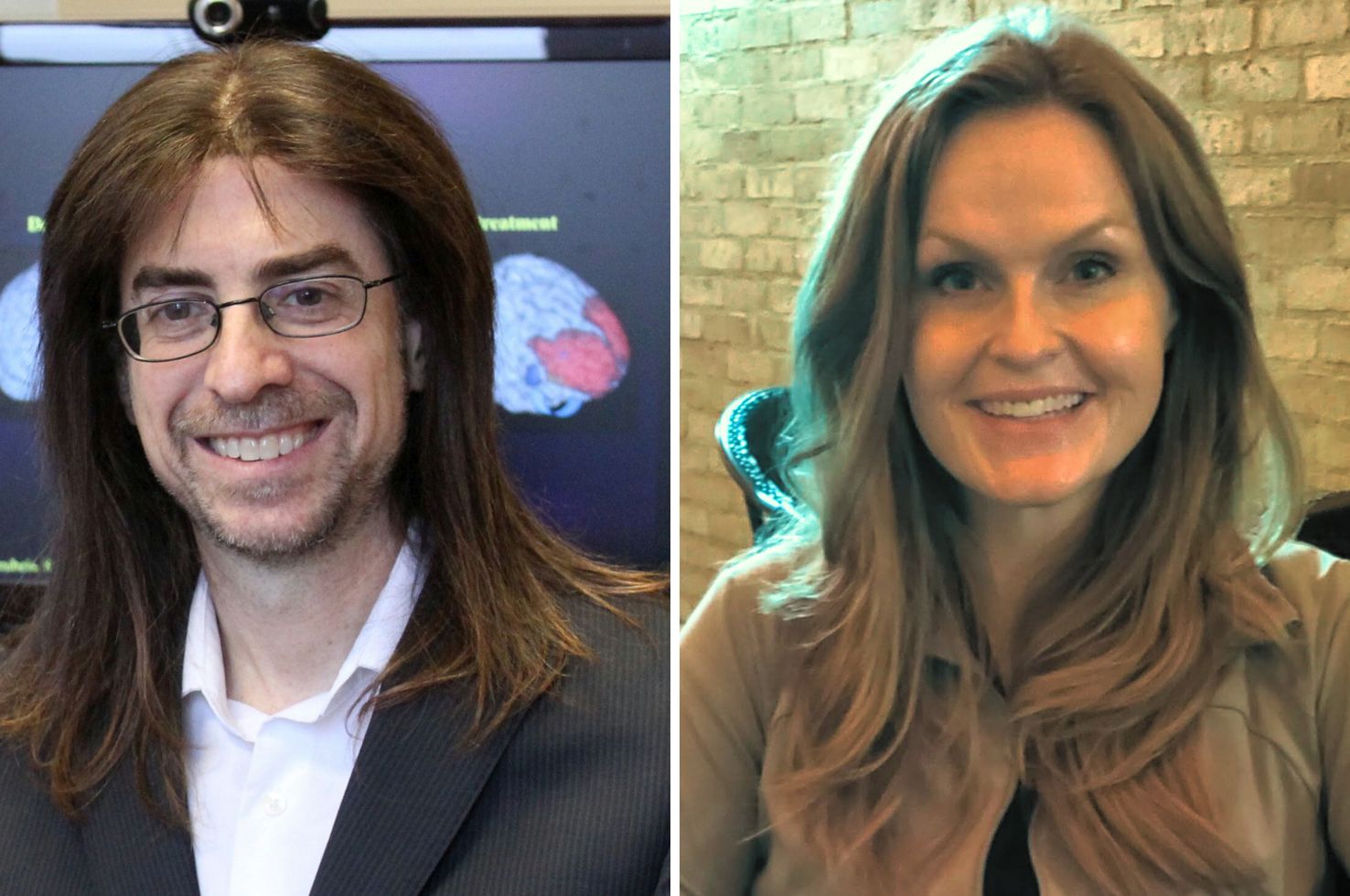
Drs. Greg Siegle and Marlene Strege

Theoretical models of neural mechanisms underlying cognitive behavior therapy (CBT) for major depressive disorder propose that psychotherapy changes neural functioning of prefrontal cortical regions associated with cognitive-control processes, as well as brain regions involved in threat- or salience-related reactivity. However, individuals with major depressive disorder can be vulnerable to recurrence of depression symptoms after intervention, suggesting that underlying neural mechanisms of major depressive disorder can persist despite treatment.

To identify brain regions resistant to or responsive to change following CBT, investigators including Marlene Strege, PhD (postdoctoral research fellow), and Greg Siegle, PhD (Professor of Psychiatry and Clinical and Translational Science), from Pitt Psychiatry, collected functional magnetic resonance imaging (fMRI) data from a cohort of individuals with major depressive disorder before and after receiving CBT, as well as from a comparison group of individuals without depression. 

In a paper published in Psychological Medicine, the scientists reported nonresponse in a cerebellar region and response in prefrontal and parietal regions.

“When interviewing individuals who underwent CBT for depression a decade ago, I found that treated depression often involves chronic subclinical symptoms and episode recurrence,” said Dr. Strege, the study’s first author. “These findings and the larger supporting literature prompted the question: which brain processes remain unaddressed by our interventions? In the current study, we identified a vermis-centered cerebellar cluster exhibiting persistent aberrant functioning after CBT. The presence of post-treatment neural vulnerabilities with poor long-term clinical outcomes highlights depression’s chronic nature and supports continued assessments after treatment.” 

“These findings could help to provide new insights into why depression sometimes recurs following therapy, and what we could do about it. Identifying this cerebellar region, which reacts differently in depressed vs. never-depressed people before treatment but does not change in therapy, gives us a new target for interventions geared to treat the whole syndrome. Interventions such as exercise, which target cerebellar function, may thus be particularly fruitful as adjuncts for traditional therapies” said Dr. Siegle, the study’s senior author.

Trying to name what doesn't change: Neural nonresponse to Cognitive Therapy for depression
Strege MV, Richey JA, Siegle GJ.

Psychological Medicine, 1-12. doi:10.1017/S0033291723000727

University of Pittsburgh logo

Stay connected

  • LinkedIn
  • Bluesky
  • Instagram
  • Facebook
  • Threads

Location

Thomas Detre Hall
3811 O'Hara Street
Pittsburgh, PA 15213
  • Contact Us

Related Websites

  • medschool.pitt.edu
  • pitt.edu

Explore

  • Find People
  • Education
  • Research
  • Patient Care
  • Community & Culture
  • About Us
  • News and Events

Information for

  • Faculty & Staff
  • Prospective Trainees
  • Investigators
  • Patients & Families

Intranet Sites

  • Psy Hub for faculty (requires UPMC log-in and UPMC computer or access through MyApps)
  • Postdoc Portal Postdoc Portal for postdoctoral trainees
  • Office of Grants and Contracts (OGC) website accessible on internal network only

Join Our Newsletter

Stay up to date on department and faculty happenings.

University of Pittsburgh Department of Psychiatry mailing list Fill in the form to subscribe to the mailing list.

Psychiatry Advances Podcast

Covering Innovative research and patient-centered programs.

Listen to Podcast

© 2026 University of Pittsburgh Department of Psychiatry