University of Pittsburgh logo
Department of Psychiatry
University of Pittsburgh logo
Information for You
  • Faculty & Staff
  • Prospective Trainees
  • Investigators
  • Patients & Families
Our People
Menu
  • Education
    • Education Overview
    • Residency & Fellowships
    • Research Training
    • Medical Student Education
    • Clinical Psychology Internship
    • Clinician Career Development
  • Research
    • Research Overview
    • Research Faculty
    • Research Training
    • Investigator Resources
    • Health Equity Research
    • Participate in Research
  • Patient Care
    • Patient Care Overview
    • Access to Care
    • Clinical Services Overview
    • Clinical Faculty
    • Resources for Clinicians
  • Community & Culture
    • Community & Culture Overview
    • Leadership & Advisory Council
    • Research Equity & Community Health (REACH)
    • Community & Partnership
    • Community News
  • About Us
    • About Us Overview
    • Chair's Message
    • Our People
    • Our History, Our Present, & Our Future
    • Life in Pittsburgh
  • News & Events
    • News & Events Overview
    • News
    • Events
  • Information for You
    • Faculty & Staff
    • Prospective Trainees
    • Investigators
    • Patients & Families
  • Our People

Main menu

  • Education
    • Residency & Fellowships
      • Residency Training
      • Training Pathways & Concentrations
      • Clinical Fellowships
      • Our Clinical Learning Environment
      • Our Leadership
      • Our Chief Residents
      • Our Residents
    • Research Training
      • Undergraduate & Graduate Student Training
      • Medical Student Research
      • Research During Residency
      • Postdoctoral Training
      • Medical Student Education
      • Clinical Psychology Internship
      • Clinician Career Development
  • Research
    • Research Training
      • Undergraduate & Graduate
      • Medical Student Research
      • Research During Residency
      • Postdoctoral Training
    • Investigator Resources
      • Research Day
      • Research Review Committee
      • Assessment Instruments
    • Health Equity Research
      • REACH Collaborative
      • Research Faculty
      • Participate in Research
  • Patient Care
      • Access to Care
      • Clinical Services Overview
      • Clinical Faculty
      • Resources for Clinicians
  • Community & Culture
  • About Us
    • Our People
      • Faculty
      • Staff
      • Emeritus Faculty
      • Chair's Message
      • Our History, Our Present, & Our Future
      • Life in Pittsburgh
  • News & Events
      • News
      • Events
  • Search

Breadcrumb menu

  1. Home
  2. News
  • September 30, 2024
  • Share on LinkedIn
  • Share on Bluesky
  • Share on Facebook
  • Share on Threads
  • Share via email

Diabetes: Development of Novel Tools for Dissection of Central Versus Peripheral Dopamine D2-Like Receptor Signaling in Dysglycemia
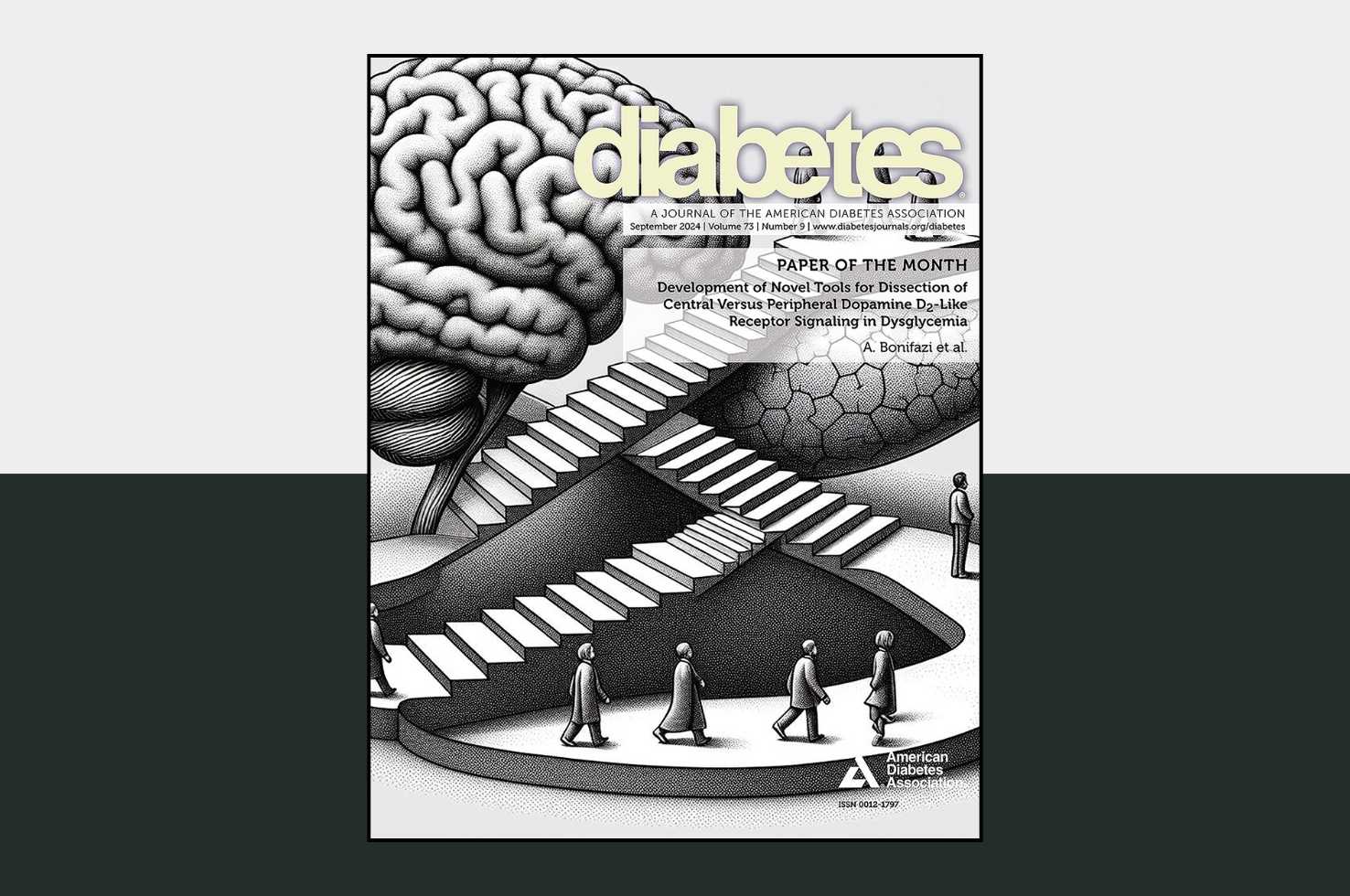
Diabetes

Most studies examining dopaminergic modulation of metabolism have focused on D2-like receptors (D2, D3, and D4 receptors) in brain regions associated with metabolic regulation, including striatum and hypothalamus, where D2 and D3 receptors mediate appetite, feeding, and central glucose sensing. However, dopamine D2-like receptors in both the central nervous system and the periphery are key modulators of metabolism. Moreover, disruption of D2-like receptor signaling is implicated in loss of blood sugar control. Yet the respective metabolic contributions of central nervous system versus peripheral D2-like receptors, including D2 and D3 receptors, remain poorly understood due to the paucity of pharmacological tools targeting these respective compartments. 

A team of scientists led by Zachary Freyberg, MD, PhD (Associate Professor of Psychiatry and Cell Biology), developed new pharmacological tools, D2-like receptor agonists with diminished and delayed blood-brain barrier capability, to examine the relative contributions of central nervous system versus peripheral dopamine signaling in treating dysglycemia.

“We’re excited about establishing the first generation of drug tools to start disentangling how the brain and the rest of the body communicate to control blood sugar. This allows us to also better understand why dopaminergic drugs like bromocriptine are effective diabetes drugs,” said Dr. Freyberg, senior and corresponding author of the study which was recently published in Diabetes and featured as Paper of the Month. Alessandro Bonifazi, PhD (University of Texas Medical Branch) served as first author of the paper.

The investigators found that systemic administration of bromocriptine, with unrestricted access to central nervous system and peripheral targets including pancreas, significantly improved both insulin sensitivity and glucose tolerance in obese, dysglycemic mice in vivo. In contrast, metabolic improvements were attenuated when access to bromocriptine was restricted either to the central nervous system through intracerebroventricular administration or delayed access to the central nervous system via bromocriptine methiodide.

“The development of peripherally-limited dopaminergic drugs will not only serve as a new strategy to study brain versus peripheral dopamine signaling in metabolism, but may ultimately be applied to treat the metabolic effects of psychiatric medications like antipsychotic drugs,” said Dr. Freyberg.

Development of Novel Tools for Dissection of Central Versus Peripheral Dopamine D2-Like Receptor Signaling in Dysglycemia
Bonifazi A, Ellenberger M, Farino ZJ, Aslanoglou D, Rais R, Pereira S, Mantilla-Rivas JO, Boateng CA, Eshelman AJ, Janowsky A, Hahn MK, Schwartz GJ, Slusher BS, Newman AH, Freyberg Z.
Diabetes 2024;73(9):1411–1425 https://doi.org/10.2337/db24-0175 

University of Pittsburgh logo

Stay connected

  • LinkedIn
  • Bluesky
  • Instagram
  • Facebook
  • Threads

Location

Thomas Detre Hall
3811 O'Hara Street
Pittsburgh, PA 15213
  • Contact Us

Related Websites

  • medschool.pitt.edu
  • pitt.edu

Explore

  • Find People
  • Education
  • Research
  • Patient Care
  • Community & Culture
  • About Us
  • News and Events

Information for

  • Faculty & Staff
  • Prospective Trainees
  • Investigators
  • Patients & Families

Intranet Sites

  • Psy Hub for faculty (requires UPMC log-in and UPMC computer or access through MyApps)
  • Postdoc Portal Postdoc Portal for postdoctoral trainees
  • Office of Grants and Contracts (OGC) website accessible on internal network only

Join Our Newsletter

Stay up to date on department and faculty happenings.

University of Pittsburgh Department of Psychiatry mailing list Fill in the form to subscribe to the mailing list.

Psychiatry Advances Podcast

Covering Innovative research and patient-centered programs.

Listen to Podcast

© 2026 University of Pittsburgh Department of Psychiatry