University of Pittsburgh logo
Department of Psychiatry
University of Pittsburgh logo
Information for You
  • Faculty & Staff
  • Prospective Trainees
  • Investigators
  • Patients & Families
Our People
Menu
  • Education
    • Education Overview
    • Residency & Fellowships
    • Research Training
    • Medical Student Education
    • Clinical Psychology Internship
    • Clinician Career Development
  • Research
    • Research Overview
    • Research Faculty
    • Research Training
    • Investigator Resources
    • Health Equity Research
    • Participate in Research
  • Patient Care
    • Patient Care Overview
    • Access to Care
    • Clinical Services Overview
    • Clinical Faculty
    • Resources for Clinicians
  • Community & Culture
    • Community & Culture Overview
    • Leadership & Advisory Council
    • Research Equity & Community Health (REACH)
    • Community & Partnership
    • Community News
  • About Us
    • About Us Overview
    • Chair's Message
    • Our People
    • Our History, Our Present, & Our Future
    • Life in Pittsburgh
  • News & Events
    • News & Events Overview
    • News
    • Events
  • Information for You
    • Faculty & Staff
    • Prospective Trainees
    • Investigators
    • Patients & Families
  • Our People

Main menu

  • Education
    • Residency & Fellowships
      • Residency Training
      • Training Pathways & Concentrations
      • Clinical Fellowships
      • Our Clinical Learning Environment
      • Our Leadership
      • Our Chief Residents
      • Our Residents
    • Research Training
      • Undergraduate & Graduate Student Training
      • Medical Student Research
      • Research During Residency
      • Postdoctoral Training
      • Medical Student Education
      • Clinical Psychology Internship
      • Clinician Career Development
  • Research
    • Research Training
      • Undergraduate & Graduate
      • Medical Student Research
      • Research During Residency
      • Postdoctoral Training
    • Investigator Resources
      • Research Day
      • Research Review Committee
      • Assessment Instruments
    • Health Equity Research
      • REACH Collaborative
      • Research Faculty
      • Participate in Research
  • Patient Care
      • Access to Care
      • Clinical Services Overview
      • Clinical Faculty
      • Resources for Clinicians
  • Community & Culture
  • About Us
    • Our People
      • Faculty
      • Staff
      • Emeritus Faculty
      • Chair's Message
      • Our History, Our Present, & Our Future
      • Life in Pittsburgh
  • News & Events
      • News
      • Events
  • Search

Breadcrumb menu

  1. Home
  2. News
  • December 6, 2017
  • Share on LinkedIn
  • Share on Bluesky
  • Share on Facebook
  • Share on Threads
  • Share via email

Hot Publication – Freyberg et al.
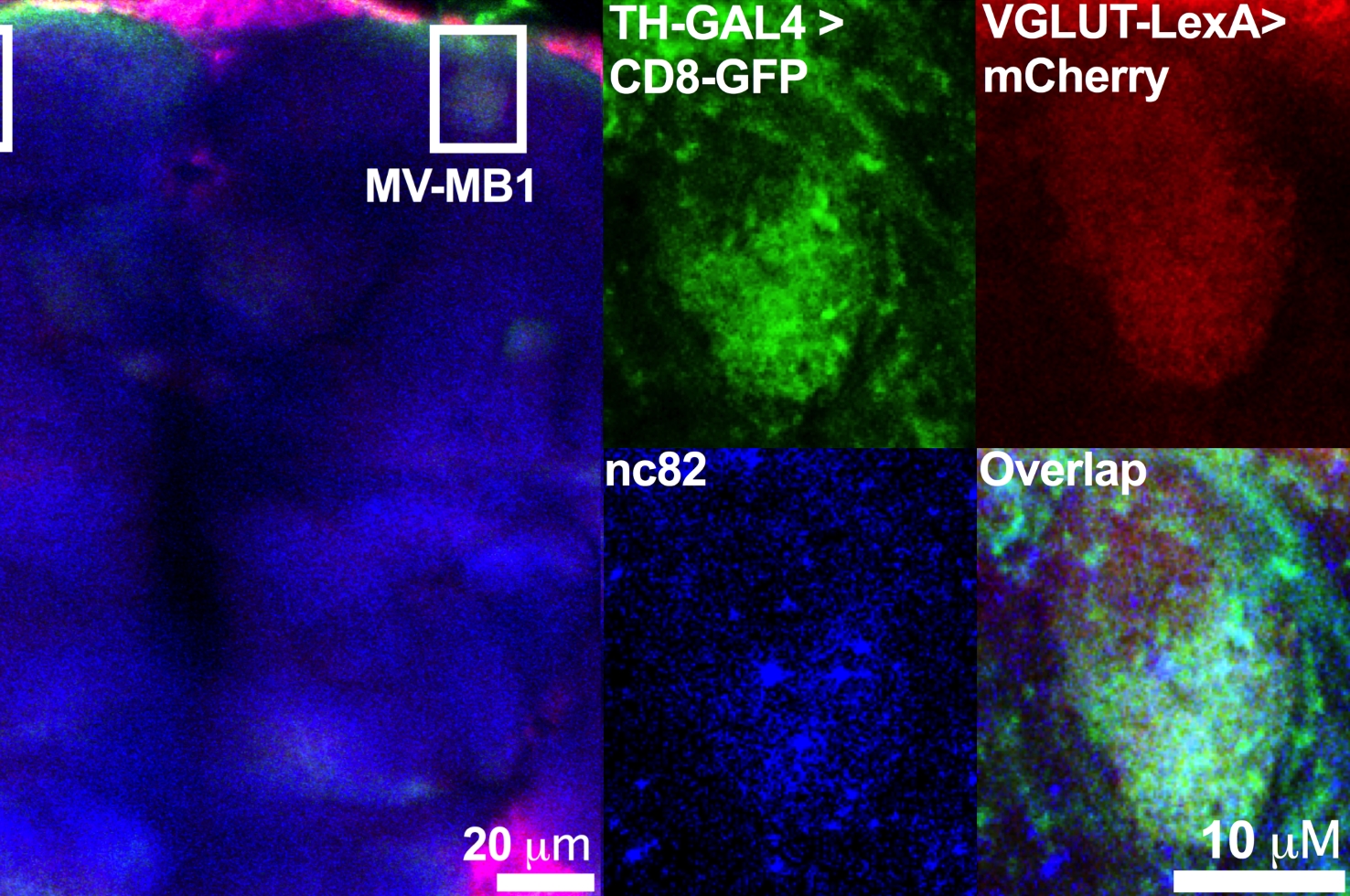
Freyberg & Colleagues Neuron 2017

Findings by Dr. Zachary Freyberg et al. challenge the existing dogma about how dopamine-releasing neurons communicate, showing that they can change the amount of dopamine released as a function of their overall activity. Malfunctioning of this mechanism could have major implications for many dopamine-related diseases, including schizophrenia, Parkinson’s disease, and addiction.

The basics of dopamine signaling indicate that when a dopamine neuron fires, vesicles containing the neurotransmitter migrate to the cell membrane where they fuse and release their cargo into the synapse. Prior to this study, existing dogma stated that neurons release fixed amounts of chemical signal at any one time and that vesicle content is static. However, Zachary Freyberg, MD, PhD and colleagues have shown that cell activity modulates vesicle dopamine content and have uncovered the mechanism by which neurons keep up with the demands of repeatedly sending signals to other neurons. 

The team used a coordinated genetic, pharmacological, and imaging approach to observe dopamine signaling in living Drosophila brains. Dr. Freyberg helped to develop this technique using molecules of fluorescent false neurotransmitter (FFN), FFN206. In this study, the team used a recently developed second-generation FFN to visualize the dynamics of synaptic vesicle dopamine loading and release in presynaptic dopamine nerve terminals. The vesicles loaded extra cargo before fusing with the plasma membrane during neuron activity, contradicting the view that vesicles’ dopamine levels are fixed. Subsequent experiments showed that this activity-induced vesicle loading was due to an increase in acidity levels inside the vesicles. 

To investigate the mechanisms of this activity-dependent phenomenon further, the researchers looked for signals associated with the boost in vesicle content. They found that before fusion but after cell membrane depolarization—a sign of neuronal activity—the pH inside vesicles dropped. When they blocked the entry of glutamate into these dopamine vesicles, they no longer acidified further and no longer loaded more dopamine in response to activity. The researchers observed similar processes in mice, and in a new paradigm, suggest how this unexpected role for glutamate links neuronal activity to dopamine vesicle content across species.

Dr. Freyberg is now investigating how these mechanisms fine-tune the amount of dopamine sent across the synapse, and their effects on neuronal communication in normal and diseased brains. “It’s as if we’ve been thinking all our lives that when you turn on a light, you just flip a switch, and it’s on or off,” he says. “But what this suggests is that neurons are capable of a great deal more subtlety.” In the future, the team plans to look more closely at how increases in vesicle acidification affect health. 

Neuronal Depolarization Drives Increased Dopamine Synaptic Vesicle Loading via VGLUT
Aguilar JI, Dunn M, Mingote S, Karam CS, Farino ZJ, Sonders MS, Choi SJ, Grygoruk A, Zhang Y, Cela C, Choi BJ, Flores J, Freyberg RJ, McCabe MD, Mosharov EV, Krantz DE, Javitch JA, Sulzer D, Sames D, Rayport S, Freyberg Z

Neuron. Published online August 17, 2017. 

University of Pittsburgh logo

Stay connected

  • LinkedIn
  • Bluesky
  • Instagram
  • Facebook
  • Threads

Location

Thomas Detre Hall
3811 O'Hara Street
Pittsburgh, PA 15213
  • Contact Us

Related Websites

  • medschool.pitt.edu
  • pitt.edu

Explore

  • Find People
  • Education
  • Research
  • Patient Care
  • Community & Culture
  • About Us
  • News and Events

Information for

  • Faculty & Staff
  • Prospective Trainees
  • Investigators
  • Patients & Families

Intranet Sites

  • Psy Hub for faculty (requires UPMC log-in and UPMC computer or access through MyApps)
  • Postdoc Portal Postdoc Portal for postdoctoral trainees
  • Office of Grants and Contracts (OGC) website accessible on internal network only

Join Our Newsletter

Stay up to date on department and faculty happenings.

University of Pittsburgh Department of Psychiatry mailing list Fill in the form to subscribe to the mailing list.

Psychiatry Advances Podcast

Covering Innovative research and patient-centered programs.

Listen to Podcast

© 2026 University of Pittsburgh Department of Psychiatry