University of Pittsburgh logo
Department of Psychiatry
University of Pittsburgh logo
Information for You
  • Faculty & Staff
  • Prospective Trainees
  • Investigators
  • Patients & Families
Our People
Menu
  • Education
    • Education Overview
    • Residency & Fellowships
    • Research Training
    • Medical Student Education
    • Clinical Psychology Internship
    • Clinician Career Development
  • Research
    • Research Overview
    • Research Faculty
    • Research Training
    • Investigator Resources
    • Health Equity Research
    • Participate in Research
  • Patient Care
    • Patient Care Overview
    • Access to Care
    • Clinical Services Overview
    • Clinical Faculty
    • Resources for Clinicians
  • Community & Culture
    • Community & Culture Overview
    • Leadership & Advisory Council
    • Research Equity & Community Health
    • Community & Partnership
    • Community News
    • Community Awards & Accolades
  • About Us
    • About Us Overview
    • Chair's Message
    • Our People
    • Our History, Our Present, & Our Future
    • Life in Pittsburgh
  • News & Events
    • News & Events Overview
    • News
    • Events
  • Information for You
    • Faculty & Staff
    • Prospective Trainees
    • Investigators
    • Patients & Families
  • Our People

Main menu

  • Education
    • Residency & Fellowships
      • Residency Training
      • Training Pathways & Concentrations
      • Clinical Fellowships
      • Our Clinical Learning Environment
      • Our Leadership
      • Our Chief Residents
      • Our Residents
    • Research Training
      • Undergraduate & Graduate Student Training
      • Medical Student Research
      • Research During Residency
      • Postdoctoral Training
      • Medical Student Education
      • Clinical Psychology Internship
      • Clinician Career Development
  • Research
    • Research Training
      • Undergraduate & Graduate
      • Medical Student Research
      • Research During Residency
      • Postdoctoral Training
    • Investigator Resources
      • Research Day
      • Research Review Committee
      • Assessment Instruments
    • Health Equity Research
      • REACH Collaborative
      • Research Faculty
      • Participate in Research
  • Patient Care
      • Access to Care
      • Clinical Services Overview
      • Clinical Faculty
      • Resources for Clinicians
  • Community & Culture
      • Leadership & Advisory Council
      • Research Equity & Community Health
      • Community & Partnership
      • Community News
      • Community Awards & Accolades
  • About Us
    • Our People
      • Faculty
      • Staff
      • Emeritus Faculty
      • Chair's Message
      • Our History, Our Present, & Our Future
      • Life in Pittsburgh
  • News & Events
      • News
      • Events
  • Search

Breadcrumb menu

  1. Home
  2. News
  • January 2, 2018
  • Share on LinkedIn
  • Share on Bluesky
  • Share on Facebook
  • Share on Threads
  • Share via email

Enwright et al. Offer New Insights into Cell Type-Specific Molecular Alterations in Schizophrenia
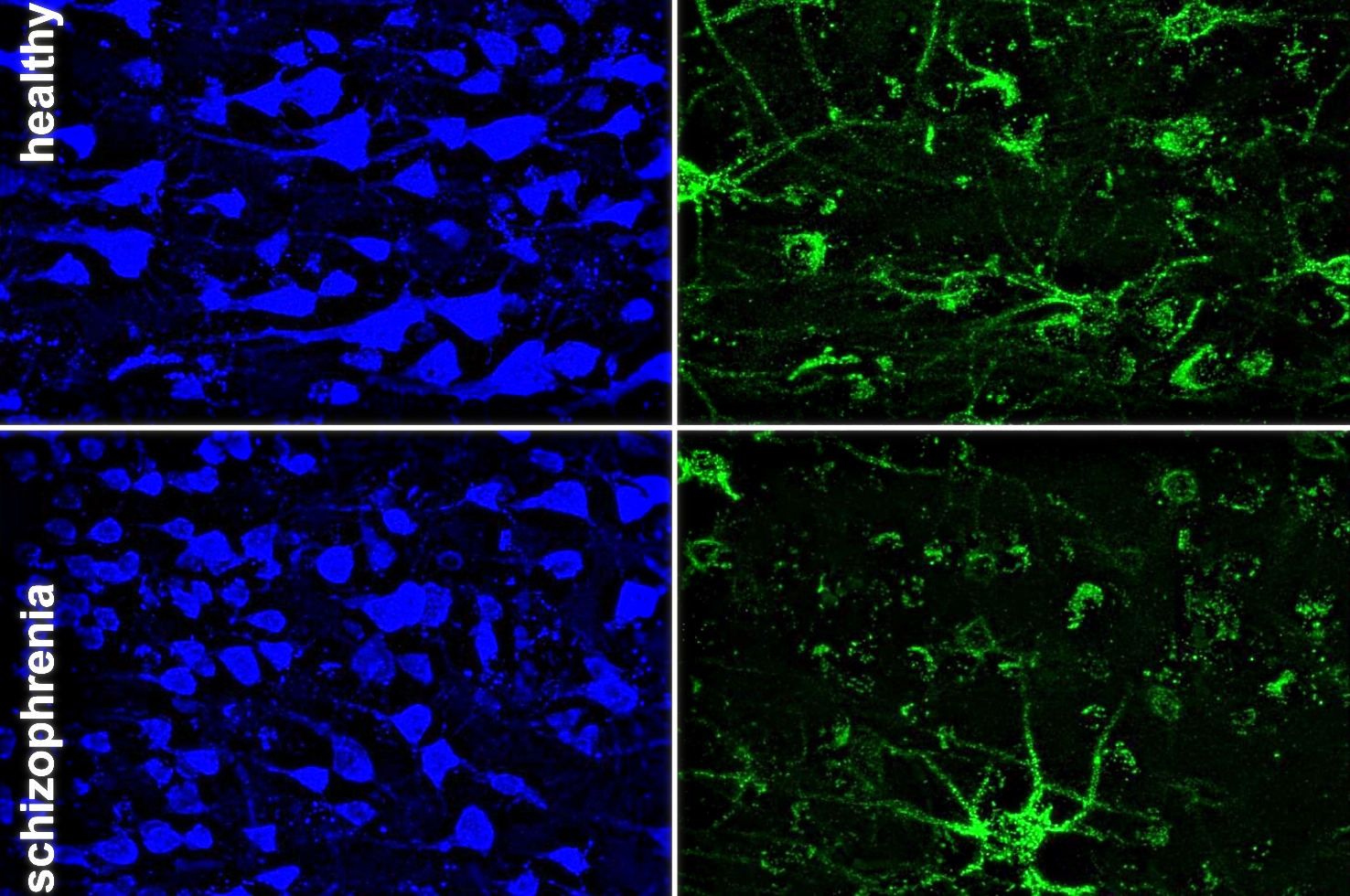
Enwright et al. Molecular Psychiatry 2017

Published in Molecular Psychiatry

Department of Psychiatry members John Enwright, PhD; Dominique Arion, PhD; and David A. Lewis, MD, along with colleagues from other departments, have identified cell type-specific molecular alterations in schizophrenia, which could propel strategies for identifying novel therapeutic targets. The researchers investigated the molecular alterations associated with schizophrenia at the level of specific cell types, showing distinct disease-related effects on gene expression in Layer 3 (L3) parvalbumin (PV) cells, as well as transcriptome alterations that are shared with L3 pyramidal cells (PCs). Comparison of the findings across cell types provides additional evidence, suggesting that many of the alterations in PV cells could be secondary to events in the L3 PCs that innervate them. 

In schizophrenia, alterations in the dorsolateral prefrontal cortex (DLPFC) are thought to underlie certain cognitive deficits, including working memory impairments, associated with the disease. Almost all transcriptome-wide studies have been conducted in total grey matter homogenates, likely masking cell-type specific alterations due to cellular heterogeneity. In this study, researchers combined an immunohistochemical approach, laser microdissection, and microarray profiling to analyze the transcriptome of DLPFC L3 PV cells in 36 matched pairs of schizophrenia and unaffected comparison subjects. They identified more than 800 transcripts in PV neurons as differentially expressed in subjects with schizophrenia. When they compared the transcriptome of L3 PCs from the same subjects, they found both shared and distinct disease-related effects on gene expression between cell types. Furthermore, network structures of gene pathways differed across cell types and subject groups.

These findings provide new insights into cell type-specific molecular alterations in schizophrenia and may point toward novel therapeutic targets.

Transcriptome Alterations of Prefrontal Cortical Parvalbumin Neurons in Schizophrenia
Enwright III JF, Huo Z, Arion D, Corradi JP, Tseng G, Lewis DA
Molecular Psychiatry, Published online November 7, 2017. doi:10.1001/jamapsychiatry.2017.1763

University of Pittsburgh logo

Stay connected

  • LinkedIn
  • Bluesky
  • Instagram
  • Facebook
  • Threads

Location

Thomas Detre Hall
3811 O'Hara Street
Pittsburgh, PA 15213
  • Contact Us

Related Websites

  • medschool.pitt.edu
  • pitt.edu

Explore

  • Find People
  • Education
  • Research
  • Patient Care
  • Community & Culture
  • About Us
  • News and Events

Information for

  • Faculty & Staff
  • Prospective Trainees
  • Investigators
  • Patients & Families

Intranet Sites

  • Psy Hub for faculty (requires UPMC log-in and UPMC computer or access through MyApps)
  • Postdoc Portal Postdoc Portal for postdoctoral trainees
  • Office of Grants and Contracts (OGC) website accessible on internal network only

Join Our Newsletter

Stay up to date on department and faculty happenings.

University of Pittsburgh Department of Psychiatry mailing list Fill in the form to subscribe to the mailing list.

Psychiatry Advances Podcast

Covering Innovative research and patient-centered programs.

Listen to Podcast

© 2026 University of Pittsburgh Department of Psychiatry