University of Pittsburgh logo
Department of Psychiatry
University of Pittsburgh logo
Information for You
  • Faculty & Staff
  • Prospective Trainees
  • Investigators
  • Patients & Families
Our People
Menu
  • Education
    • Education Overview
    • Residency & Fellowships
    • Research Training
    • Medical Student Education
    • Clinical Psychology Internship
    • Clinician Career Development
  • Research
    • Research Overview
    • Research Faculty
    • Research Training
    • Investigator Resources
    • Health Equity Research
    • Participate in Research
  • Patient Care
    • Patient Care Overview
    • Access to Care
    • Clinical Services Overview
    • Clinical Faculty
    • Resources for Clinicians
  • Community & Culture
    • Community & Culture Overview
    • Leadership & Advisory Council
    • Research Equity & Community Health
    • Community & Partnership
    • Community News
    • Community Awards & Accolades
  • About Us
    • About Us Overview
    • Chair's Message
    • Our People
    • Our History, Our Present, & Our Future
    • Life in Pittsburgh
  • News & Events
    • News & Events Overview
    • News
    • Events
  • Information for You
    • Faculty & Staff
    • Prospective Trainees
    • Investigators
    • Patients & Families
  • Our People

Main menu

  • Education
    • Residency & Fellowships
      • Residency Training
      • Training Pathways & Concentrations
      • Clinical Fellowships
      • Our Clinical Learning Environment
      • Our Leadership
      • Our Chief Residents
      • Our Residents
    • Research Training
      • Undergraduate & Graduate Student Training
      • Medical Student Research
      • Research During Residency
      • Postdoctoral Training
      • Medical Student Education
      • Clinical Psychology Internship
      • Clinician Career Development
  • Research
    • Research Training
      • Undergraduate & Graduate
      • Medical Student Research
      • Research During Residency
      • Postdoctoral Training
    • Investigator Resources
      • Research Day
      • Research Review Committee
      • Assessment Instruments
    • Health Equity Research
      • REACH Collaborative
      • Research Faculty
      • Participate in Research
  • Patient Care
      • Access to Care
      • Clinical Services Overview
      • Clinical Faculty
      • Resources for Clinicians
  • Community & Culture
      • Leadership & Advisory Council
      • Research Equity & Community Health
      • Community & Partnership
      • Community News
      • Community Awards & Accolades
  • About Us
    • Our People
      • Faculty
      • Staff
      • Emeritus Faculty
      • Chair's Message
      • Our History, Our Present, & Our Future
      • Life in Pittsburgh
  • News & Events
      • News
      • Events
  • Search

Breadcrumb menu

  1. Home
  2. News
  • December 19, 2014
  • Share on LinkedIn
  • Share on Bluesky
  • Share on Facebook
  • Share on Threads
  • Share via email

Hot Publication - Gildengers et al.
Longer Lithium Exposure is Associated with Better White Matter Integrity in Older Adults with Bipolar Disorder
Gildengers AG, Butters MA, Aizenstein HJ, Marron MM, Emanuel J, Anderson SJ, Weissfeld LA, Becker JT, Lopez OL, Mulsant BH and Reynolds CF, III
Bipolar Disorder, In Press


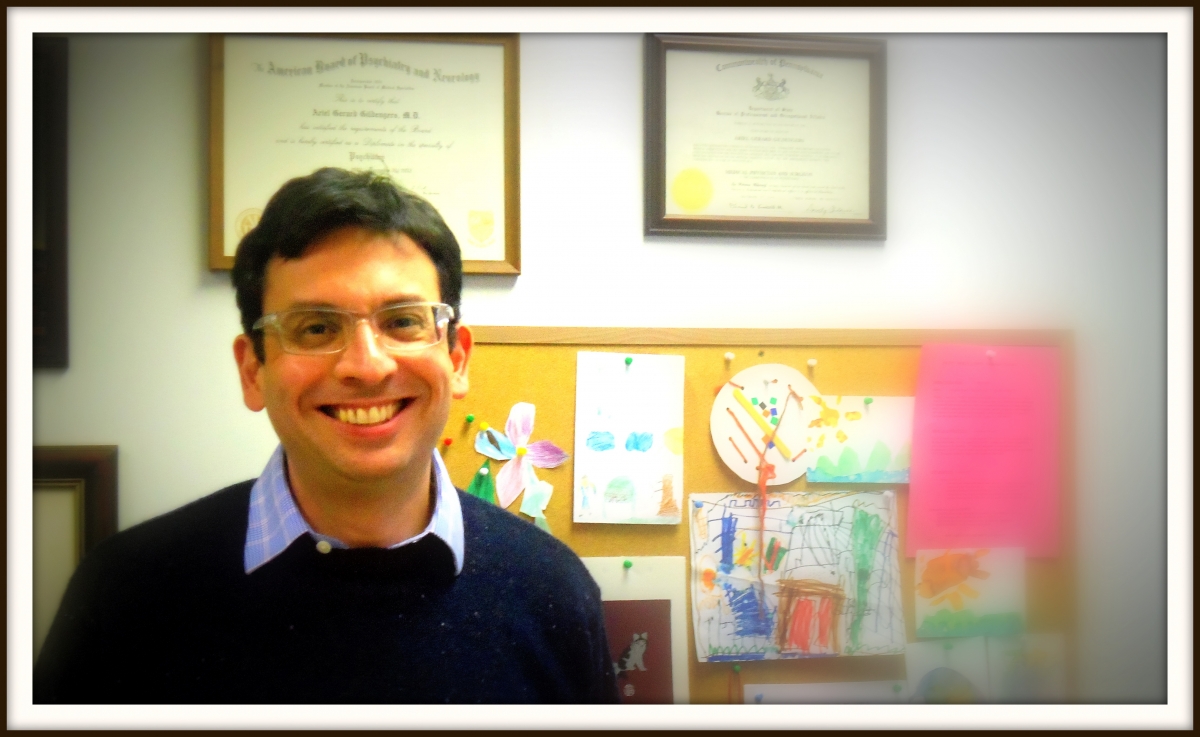
Bipolar disorder is associated with cognitive dysfunction and structural brain abnormalities.  In human and non-human studies, lithium has been related to neuroprotective and neurotrophic effects.  In a paper currently in press in the journal Bipolar Disorders, Dr. Ariel Gildengers and his colleagues explored whether lithium treatment is related to better brain integrity and cognitive function in older adults with bipolar disorder.

Dr. Gildengers and his team assessed cognitive function and obtained structural neuroimaging data in 58 individuals with bipolar disorder and 21 mentally healthy comparators of similar age and education.  The investigators examined total gray matter volume, overall white matter integrity (fractional anisotropy), and total white matter hyperintensity burden.  They found that relative to comparison subjects, participants with bipolar disorder had worse overall cognitive performance, lower total gray matter volume, and lower white matter integrity.  Among subjects with bipolar disorder, longer duration of lithium treatment was related to higher white matter integrity after controlling for age and vascular disease burden, although not with better cognitive performance.

Findings from this study suggest that lithium treatment is related to better brain integrity in older individuals with bipolar disorder, particularly in those who take lithium long-term.  

Contributors:
Ariel G. Gildengers, MD, Meryl A. Butters, PhD, Howard J. Aizenstein, MD, PhD, Megan M. Marron, BS, James Emanuel, BS, James T. Becker, PhD, and Charles F. Reynolds III, MD (University of Pittsburgh Department of Psychiatry)

Oscar L. Lopez, MD (University of Pittsburgh Department of Neurology)

Lisa A. Weissfeld, PhD (University of Pittsburgh Department of Biostatistics)

Benoit Mulsant, MD, MS, FRCPC (University of Toronto Department of Psychiatry)

Stewart J. Anderson, PhD, (University of Pennsylvania Department of Psychiatry)

This article is currently in press in Bipolar Disorders.  Click here to view the abstract.

University of Pittsburgh logo

Stay connected

  • LinkedIn
  • Bluesky
  • Instagram
  • Facebook
  • Threads

Location

Thomas Detre Hall
3811 O'Hara Street
Pittsburgh, PA 15213
  • Contact Us

Related Websites

  • medschool.pitt.edu
  • pitt.edu

Explore

  • Find People
  • Education
  • Research
  • Patient Care
  • Community & Culture
  • About Us
  • News and Events

Information for

  • Faculty & Staff
  • Prospective Trainees
  • Investigators
  • Patients & Families

Intranet Sites

  • Psy Hub for faculty (requires UPMC log-in and UPMC computer or access through MyApps)
  • Postdoc Portal Postdoc Portal for postdoctoral trainees
  • Office of Grants and Contracts (OGC) website accessible on internal network only

Join Our Newsletter

Stay up to date on department and faculty happenings.

University of Pittsburgh Department of Psychiatry mailing list Fill in the form to subscribe to the mailing list.

Psychiatry Advances Podcast

Covering Innovative research and patient-centered programs.

Listen to Podcast

© 2026 University of Pittsburgh Department of Psychiatry